
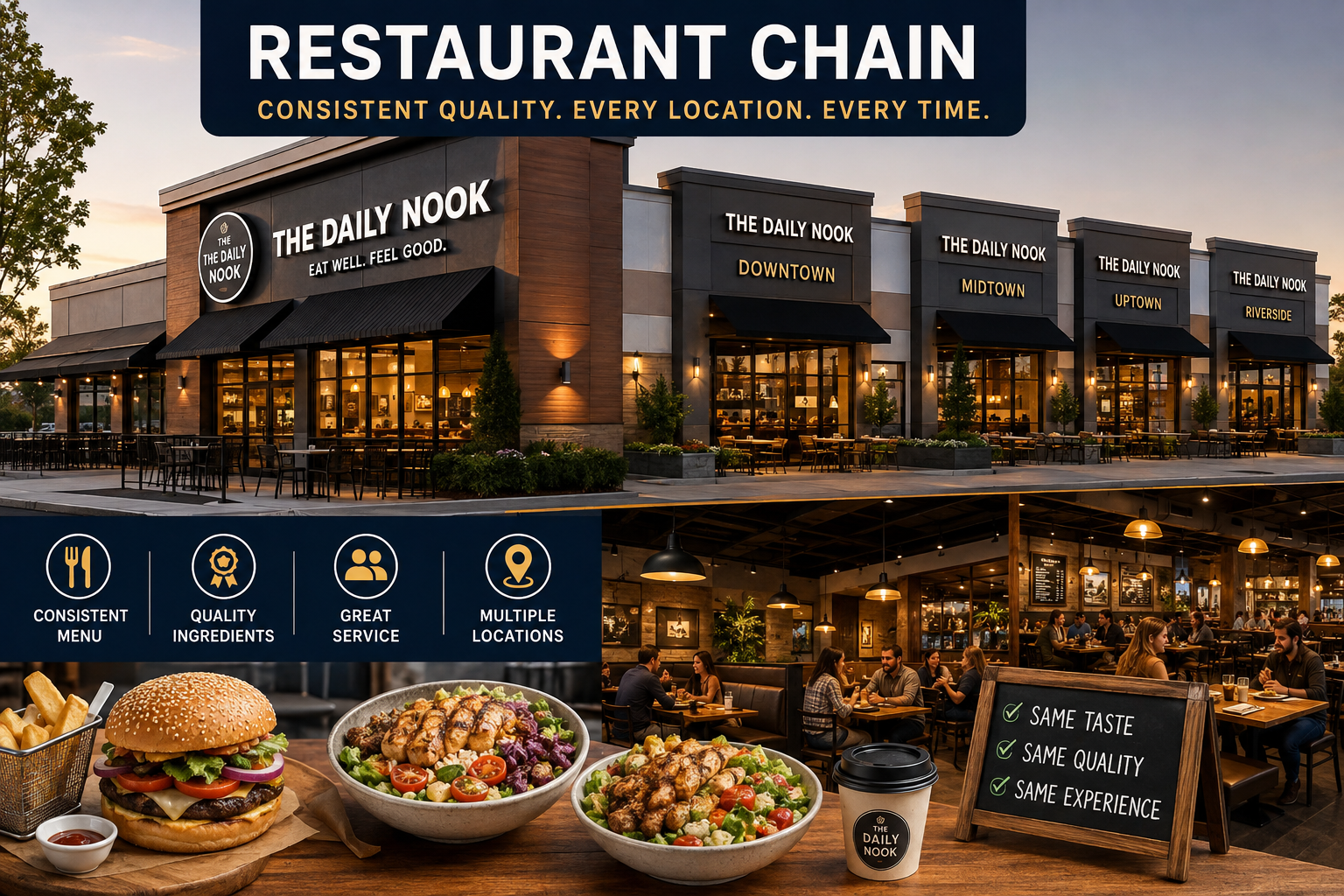
A restaurant chain is more than a collection of locations serving the same food. It’s a carefully managed business model designed to deliver consistent meals, customer service, and branding across multiple locations. Whether you’re curious about famous restaurant chains, thinking about investing in one, or simply wondering how they operate, understanding this business model can help you make smarter decisions.
In this guide, you’ll learn what defines a restaurant chain, its advantages and challenges, how successful brands grow, and the strategies that help them thrive in today’s competitive food industry.
What Is a Restaurant Chain?
A restaurant chain is a group of restaurants operating under the same brand name, using standardized menus, recipes, business processes, and customer service practices.
These locations may be:
- Company-owned
- Franchise-owned
- A combination of both
Regardless of ownership, customers expect the same experience at every location.
Key Characteristics
- Consistent branding
- Standardized menu
- Uniform food quality
- Shared marketing campaigns
- Centralized purchasing
- Operational guidelines
- Employee training systems
Why Restaurant Chains Are So Popular
Restaurant chains continue to grow because they provide reliability and convenience.
Customers appreciate knowing what they’ll receive regardless of location.
Common reasons people choose chain restaurants include:
- Familiar menu
- Predictable quality
- Fast service
- Family-friendly atmosphere
- Loyalty rewards
- Convenient locations
- Affordable pricing
Types of Restaurant Chain Businesses
Not every restaurant chain follows the same business model.
| Type | Description | Example |
|---|---|---|
| Fast Food | Quick service with limited menu | Burger chains |
| Fast Casual | Higher-quality ingredients with quick service | Modern bowl concepts |
| Casual Dining | Sit-down restaurants for families | American grill chains |
| Fine Dining | Premium service across several locations | Luxury dining groups |
| Coffee Chains | Coffee-focused multi-location businesses | Global café brands |
Benefits of Owning a Restaurant Chain
Growing into multiple locations creates opportunities that independent restaurants often cannot achieve.
Strong Brand Recognition
Customers trust brands they recognize.
When travelers see a familiar restaurant, they’re often more likely to stop because they already know what to expect.
Economies of Scale
Buying ingredients in larger quantities often lowers costs.
Benefits include:
- Better supplier pricing
- Reduced operational expenses
- Consistent inventory
- Stronger purchasing power
Easier Marketing
Instead of promoting every location individually, restaurant chains often run nationwide or regional campaigns.
This creates:
- Better advertising efficiency
- Stronger brand awareness
- Increased customer loyalty
Standardized Training
Employees follow the same systems.
This helps maintain:
- Food quality
- Customer service
- Safety standards
- Operational efficiency
Challenges Every Restaurant Chain Faces
Growth also brings new responsibilities.
Maintaining Consistency
One poorly managed location can affect the reputation of the entire brand.
Consistency must extend to:
- Food quality
- Cleanliness
- Customer service
- Wait times
Supply Chain Management
Managing inventory across multiple restaurants requires careful planning.
Unexpected issues may include:
- Ingredient shortages
- Shipping delays
- Rising food costs
- Seasonal availability
Staff Management
Hiring and retaining employees becomes increasingly difficult as locations expand.
Successful chains invest heavily in:
- Training
- Career development
- Employee engagement
- Leadership programs
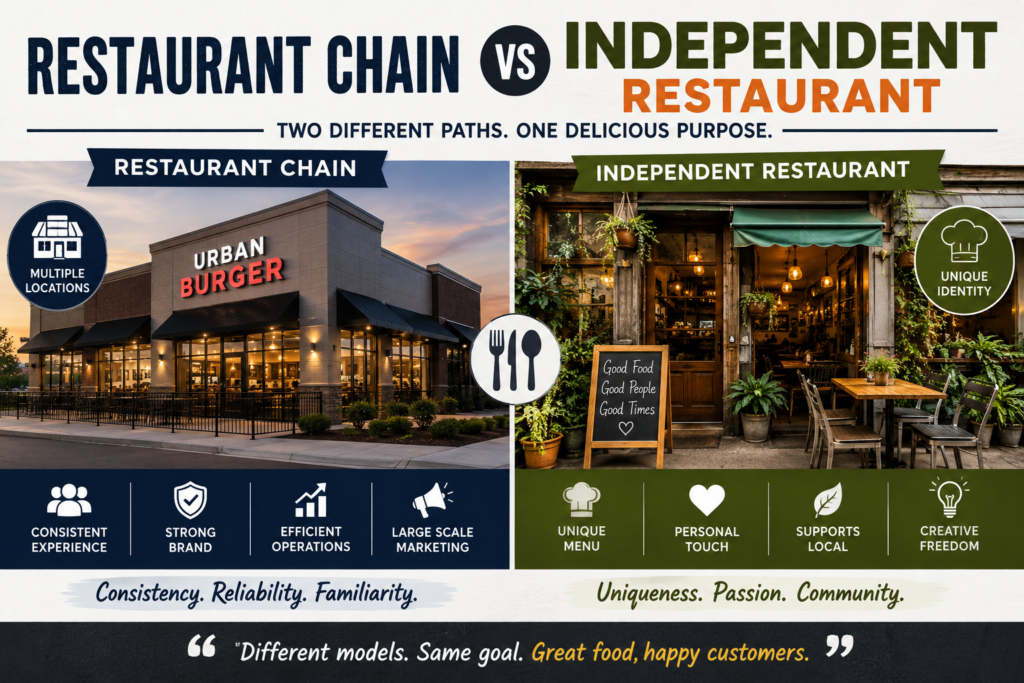
Restaurant Chain vs Independent Restaurant
Understanding the differences helps customers and business owners alike.
| Feature | Restaurant Chain | Independent Restaurant |
|---|---|---|
| Brand Recognition | High | Usually Local |
| Menu Flexibility | Limited | High |
| Marketing Budget | Large | Smaller |
| Purchasing Power | Strong | Moderate |
| Customer Experience | Consistent | Unique |
| Expansion Potential | High | Depends on Owner |
What Makes a Restaurant Chain Successful?
Several factors consistently separate successful restaurant chains from struggling ones.
1. Consistent Food Quality
Customers expect identical meals regardless of location.
Standard recipes and quality control make this possible.
2. Excellent Customer Experience
Friendly service matters just as much as great food.
Successful chains focus on:
- Quick service
- Clean dining rooms
- Accurate orders
- Helpful staff
3. Smart Location Selection
High-performing restaurant chains carefully analyze:
- Traffic patterns
- Population growth
- Local competition
- Accessibility
4. Strong Brand Identity
Successful chains build recognizable brands through:
- Memorable logos
- Consistent messaging
- Professional design
- Customer trust
5. Technology Integration
Modern restaurant chains increasingly use technology to improve efficiency.
Examples include:
- Mobile ordering
- Online reservations
- Self-service kiosks
- Digital loyalty programs
- Delivery integrations
Best Practices for Managing a Restaurant Chain
Owners and managers should focus on continuous improvement.
Recommended strategies include:
- Monitor customer feedback regularly.
- Train employees consistently.
- Review financial performance monthly.
- Update menus based on customer demand.
- Invest in digital ordering systems.
- Maintain strict food safety standards.
- Standardize operations across locations.
- Track inventory using modern software.
Common Mistakes Restaurant Chains Should Avoid
Avoiding these mistakes helps maintain long-term success.
- Expanding too quickly
- Ignoring customer reviews
- Poor employee training
- Inconsistent food quality
- Weak inventory management
- Outdated technology
- Lack of local market research
Pro Tips for Building a Successful Restaurant Chain
- Keep your menu focused rather than overly large.
- Build a memorable customer experience.
- Invest in staff development.
- Use customer data to improve operations.
- Balance consistency with occasional menu innovation.
- Maintain strong relationships with suppliers.
- Focus on long-term brand trust instead of short-term profits.
The Future of the Restaurant Chain Industry
Consumer expectations continue to evolve.
Modern restaurant chains increasingly emphasize:
- Sustainable packaging
- Healthier menu options
- Digital ordering
- AI-powered forecasting
- Contactless payment
- Personalized loyalty rewards
- Faster delivery services
Brands that adapt to changing customer preferences are more likely to remain competitive in the years ahead.
Internal Linking Opportunities
Use these natural anchor texts throughout your website:
- How to Start a Restaurant Business
- Restaurant Marketing Strategies
- Food Safety Best Practices
- Guide to Restaurant Franchising
- Improving Customer Experience in Restaurants
Suggested External Sources
Consider linking to these trusted organizations for additional authority:
- National Restaurant Association
- U.S. Small Business Administration (SBA)
- International Franchise Association (IFA)
Frequently Asked Questions
What is a restaurant chain?
A restaurant chain is a group of restaurants operating under the same brand, offering standardized menus, consistent service, and similar customer experiences across multiple locations.
How is a restaurant chain different from a franchise?
A restaurant chain refers to the overall brand with multiple locations. A franchise is a business model where independent owners operate locations under that brand’s guidelines.
What are the biggest advantages of a restaurant chain?
Key benefits include strong brand recognition, consistent customer experience, lower purchasing costs, and centralized marketing.
Are all restaurant chains franchises?
No. Some are entirely company-owned, while others operate using a mix of company-owned and franchised locations
Why do customers prefer chain restaurants?
Many customers value predictable food quality, familiar menus, convenient locations, and reliable service.
What challenges do restaurant chains face?
Common challenges include maintaining consistency, managing supply chains, staffing multiple locations, and adapting to changing customer preferences.
Can a small restaurant become a restaurant chain?
Yes. Many successful chains started as a single restaurant before expanding through company-owned locations, franchising, or partnerships.
How important is technology for restaurant chains?
Technology plays a major role in ordering, inventory management, customer loyalty, analytics, online delivery, and operational efficiency.
What industries compete with restaurant chains?
Independent restaurants, food trucks, meal delivery services, ghost kitchens, and grocery meal solutions all compete for customers.
What trends are shaping the future of restaurant chains?
Sustainability, healthier menus, automation, AI-driven operations, personalized rewards, and digital ordering are among the biggest trends.
Conclusion
A successful restaurant chain is built on much more than serving good food. Consistency, customer experience, operational efficiency, technology, and strong leadership all contribute to sustainable growth. Whether you’re researching chain restaurants, planning to launch your own brand, or exploring franchise opportunities, understanding these core principles can help you make informed decisions and recognize what separates lasting brands from short-lived concepts.
Call to Action
Looking to streamline your business operations beyond the dining industry?The dailynook provides practical insights, tools, and expert resources to help businesses improve workflows, boost productivity, and scale more efficiently. Explore more guides and discover smarter ways to grow your organization.