

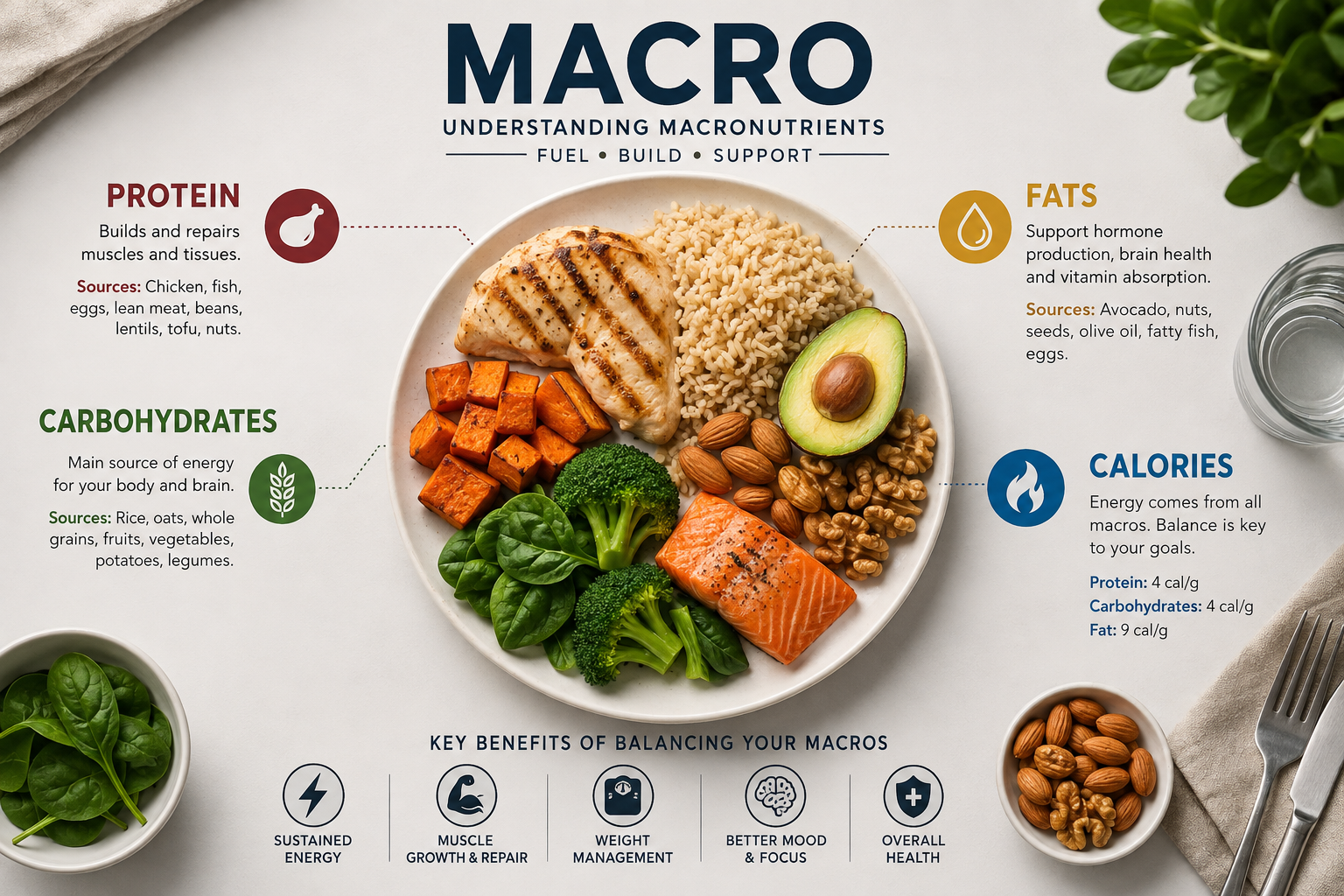
The word macro can mean different things depending on the context. In nutrition and fitness, however, “macro” is usually short for macronutrient—the nutrients your body needs in relatively large amounts to provide energy and support important functions.
The three main macronutrients are protein, carbohydrates, and fat. Each plays a different role in the body, and getting the right balance can make it easier to manage energy, support exercise, and build a sustainable eating routine.
Macro tracking has become popular because it gives people a more detailed way to understand what they eat. Instead of looking only at total calories, you also consider where those calories come from.
What Is a Macro?
A macro is short for macronutrient. Macronutrients are nutrients that the body requires in larger quantities than micronutrients such as vitamins and minerals.
There are three primary macronutrients:
- Protein
- Carbohydrates
- Fat
Alcohol is sometimes discussed as a fourth macronutrient because it provides calories, although it is not considered an essential nutrient in the same way as protein, carbohydrates, and dietary fat.
Macros provide energy and help the body perform everyday functions. Protein supports tissues and muscles, carbohydrates are an important source of energy, and fats help with hormones, cell function, and absorption of certain vitamins.
Why Do Macros Matter?
Calories tell you how much energy food provides, while macros tell you more about the nutritional composition of those calories.
For example, two meals could contain a similar number of calories but very different amounts of protein, carbohydrates, and fat. Those meals may affect fullness, exercise performance, and overall nutrition differently.
This is one reason people use macro tracking when working toward specific fitness or nutrition goals.
However, tracking macros is not automatically better for everyone. Some people find it useful and informative, while others find weighing and recording food unnecessarily restrictive. The best approach is one that supports healthy habits without making eating stressful.
The Three Main Macronutrients
1. Protein
Protein is made from amino acids and is essential for maintaining and repairing body tissues.
It is particularly relevant to people who exercise because resistance training creates a need for adequate protein to support muscle repair and adaptation.
Common protein sources include:
- Eggs
- Chicken
- Fish
- Lean meat
- Milk and yogurt
- Beans
- Lentils
- Chickpeas
- Tofu
- Nuts and seeds
Protein can also help meals feel more satisfying. Including a protein source with meals can therefore be useful for people trying to maintain a balanced diet.
2. Carbohydrates
Carbohydrates are an important source of energy. The body breaks many carbohydrates down into glucose, which can be used by cells for fuel.
Carbohydrate-rich foods include:
- Rice
- Bread
- Oats
- Potatoes
- Fruits
- Beans
- Lentils
- Pasta
- Whole grains
Not all carbohydrate sources offer the same nutritional value. Foods such as whole grains, fruit, vegetables, and legumes can provide carbohydrates alongside fiber and other nutrients.
For active people, carbohydrates can also contribute to exercise performance by providing readily available energy.
3. Fat
Dietary fat is another essential macronutrient. It helps the body absorb fat-soluble vitamins and plays roles in cell structure and hormone production.
Sources of dietary fat include:
- Avocados
- Nuts
- Seeds
- Olive oil
- Fatty fish
- Eggs
- Nut butters
Fat contains more calories per gram than protein or carbohydrates, so portion sizes can make a noticeable difference when someone is tracking calorie intake.
That does not mean fat should be avoided. The goal is to include appropriate amounts as part of an overall balanced diet.
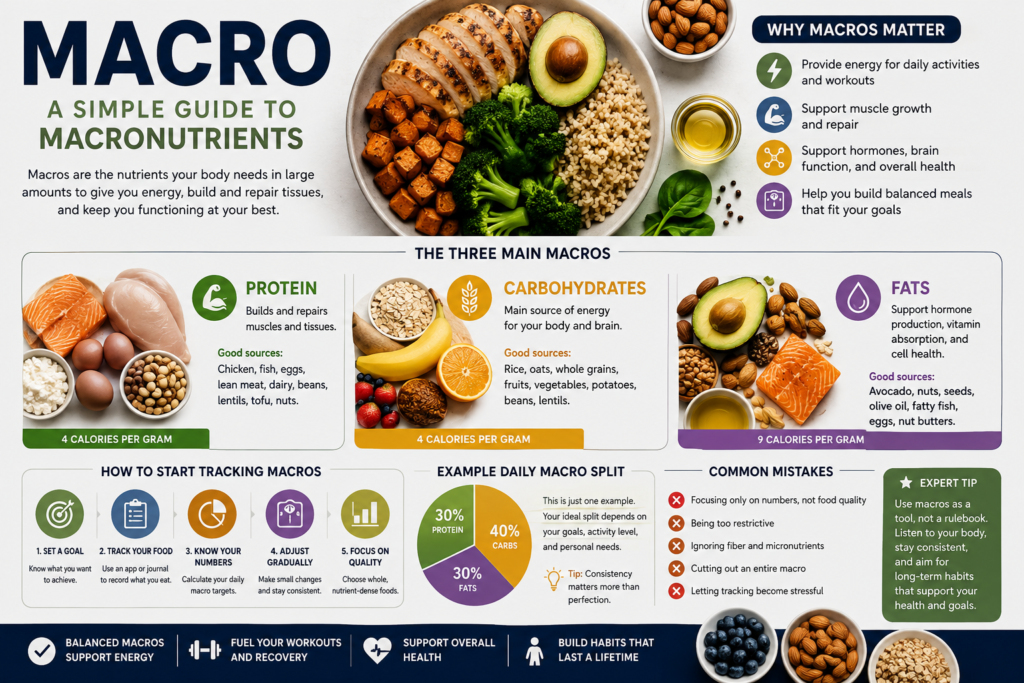
How Many Calories Are in Each Macro?
Macronutrients provide different amounts of energy:
| Macronutrient | Calories per gram |
|---|---|
| Protein | 4 calories |
| Carbohydrates | 4 calories |
| Fat | 9 calories |
This calculation can help explain why changing the amount of one macro can affect total calorie intake.
For example, increasing dietary fat can increase calories relatively quickly because fat provides more calories per gram than protein or carbohydrates.
What Is Macro Tracking?
Macro tracking means recording the amount of protein, carbohydrates, and fat you consume.
Instead of simply saying, “I ate 2,000 calories,” someone tracking macros might also have a daily target for each macronutrient.
A person could use a food diary, nutrition app, food labels, or a spreadsheet to keep track.
The goal is not necessarily to make every meal mathematically perfect. Macro tracking can simply provide a clearer picture of eating habits.
How to Start Tracking Macros
If you want to experiment with macro tracking, start with the basics rather than trying to control every detail immediately.
Step 1: Understand Your Goal
Your nutrition targets depend partly on what you are trying to achieve.
Common goals include:
- Maintaining current weight
- Losing body fat
- Supporting muscle growth
- Improving sports performance
- Creating more balanced meals
A target designed for one goal may not be appropriate for another.
Step 2: Learn to Read Food Labels
Nutrition labels can show calories, protein, carbohydrates, and fat per serving.
Pay attention to the serving size. A package may contain multiple servings, so eating the entire package can mean consuming more calories and macros than the label’s first number suggests.
Step 3: Track Your Normal Diet
Before making major changes, consider recording what you normally eat for several days.
This gives you useful information about your current habits and may reveal simple areas for improvement.
Step 4: Focus on Food Quality
Macros are useful, but they are not the entire picture.
Two foods can have similar macro numbers while offering different amounts of fiber, vitamins, minerals, and other beneficial compounds.
A balanced diet should therefore include a variety of nutritious foods rather than focusing only on hitting numbers.
Step 5: Adjust Gradually
There is usually no need to completely change your diet overnight.
Small adjustments—such as adding a protein source to breakfast or choosing whole grains more often—can be easier to maintain over time.
Macro Tracking for Weight Loss
People often use macro tracking while trying to lose weight because it can make calorie intake easier to understand.
However, weight loss is not determined by a particular macro ratio alone. Overall energy intake, food choices, activity, sleep, and individual circumstances all matter.
A common mistake is to assume that eating a certain percentage of protein, carbohydrates, and fat will automatically cause fat loss.
Macros can be a useful framework, but they are not a magic formula.
For sustainable weight management, it is generally more useful to build meals around nutritious foods, reasonable portions, adequate protein, and an eating pattern that you can maintain.
Macro Tracking for Muscle Growth
People focused on building muscle often pay close attention to protein intake while also making sure they consume enough overall energy and carbohydrates to support training.
Protein provides amino acids needed for muscle protein synthesis, while carbohydrates can help fuel demanding workouts.
Strength training is also essential. Simply increasing protein without appropriate resistance training will not produce the same results as a structured training program combined with suitable nutrition.
Common Macro Tracking Mistakes
Focusing Only on Numbers
Hitting a macro target does not automatically make a diet nutritious.
A diet can technically fit certain macro targets while being low in fiber and other important nutrients.
Being Too Precise
Food labels and nutrition databases are not always perfectly precise. Cooking methods, food varieties, and portion sizes can change nutritional values.
Treat macro tracking as a useful estimate rather than a laboratory measurement.
Ignoring Fiber
Fiber is important for digestive health and is found in foods such as vegetables, fruit, legumes, nuts, seeds, and whole grains.
A macro-focused diet should still include plenty of fiber-rich foods.
Cutting Out an Entire Macro
Protein, carbohydrates, and fat all have important roles. Eliminating an entire macronutrient is generally unnecessary for most people.
A better approach is to consider the overall quality and quantity of the foods you eat.
Letting Tracking Become Stressful
If tracking every ingredient makes eating difficult or causes unnecessary anxiety, it may not be the right strategy.
Nutrition should support your life rather than dominate it.
Expert Tips for Using Macros Wisely
Think of macros as a framework, not a set of rules that must be followed perfectly.
Build most meals around nutritious whole or minimally processed foods. Include a reliable protein source, choose carbohydrate sources that fit your energy needs, and include healthy sources of dietary fat.
It can also help to look at your diet over several days rather than judging yourself based on one meal.
For people with specific medical, nutritional, or athletic needs, individualized guidance from a qualified dietitian or healthcare professional can be more appropriate than using generic macro targets from the internet.
Frequently Asked Questions
What does macro mean in nutrition?
In nutrition, macro usually means macronutrient. The three main macronutrients are protein, carbohydrates, and fat.
Why are macros important?
Macros provide energy and support important functions in the body. Protein, carbohydrates, and fat each have different roles in maintaining health and supporting physical activity.
How many calories are in a macro?
Protein and carbohydrates provide about 4 calories per gram, while fat provides about 9 calories per gram.
Is tracking macros necessary to lose weight?
No. Macro tracking is one possible approach, but it is not required. Many people can manage their weight without tracking individual macronutrients.
What is the most important macro?
There is no single “most important” macro for everyone. Protein, carbohydrates, and fat all have important functions, and appropriate intake depends on individual needs and circumstances.
Can I eat carbs while losing weight?
Yes. Carbohydrates can be part of a weight-loss diet. The overall amount of food and energy consumed, along with food quality and lifestyle factors, matters more than simply avoiding carbohydrates.
Should beginners track macros?
Beginners can track macros if they find it helpful, but it is not essential. Learning basic portion awareness and building balanced meals may be a simpler starting point.
Can macro tracking help with fitness?
It can. Understanding protein, carbohydrates, and fat can help people organize their diets around training and fitness goals. It works best when combined with appropriate exercise and realistic expectations.
Final Thoughts
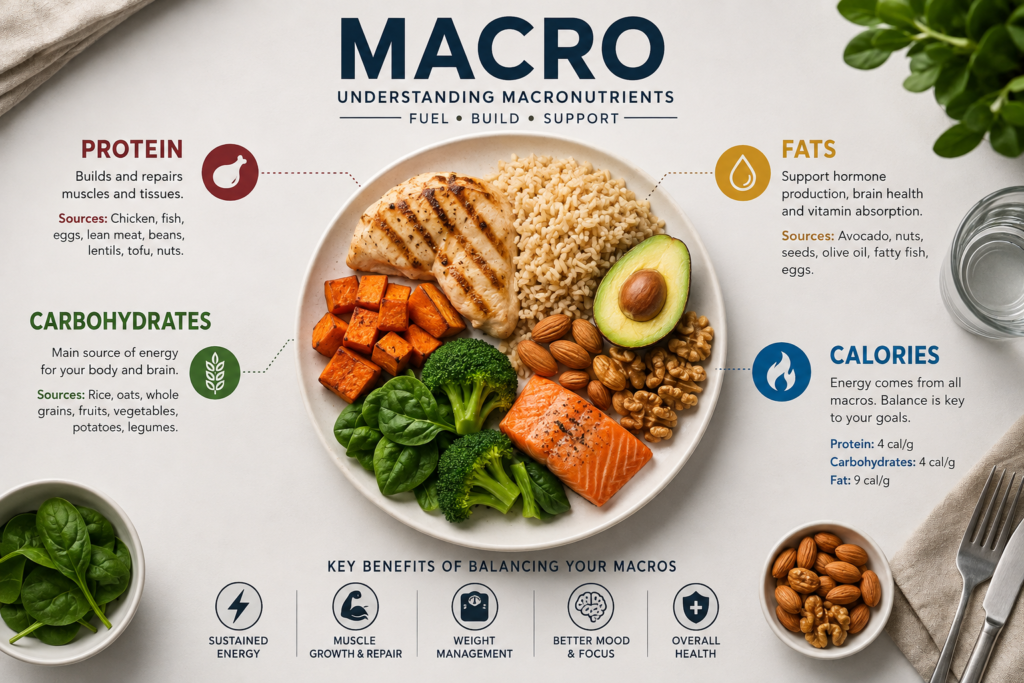
Understanding macro nutrition can make it easier to see beyond a food’s calorie count. Protein, carbohydrates, and fat each contribute something different to the way the body functions.
Macro tracking can be useful for people who enjoy detailed nutrition planning, but it is not a requirement for eating well. Food quality, variety, portions, physical activity, and long-term consistency still matter.
The most practical approach is to use macros as information rather than as rigid rules. A balanced eating pattern that you can realistically maintain is usually more valuable than a perfect-looking set of numbers.