

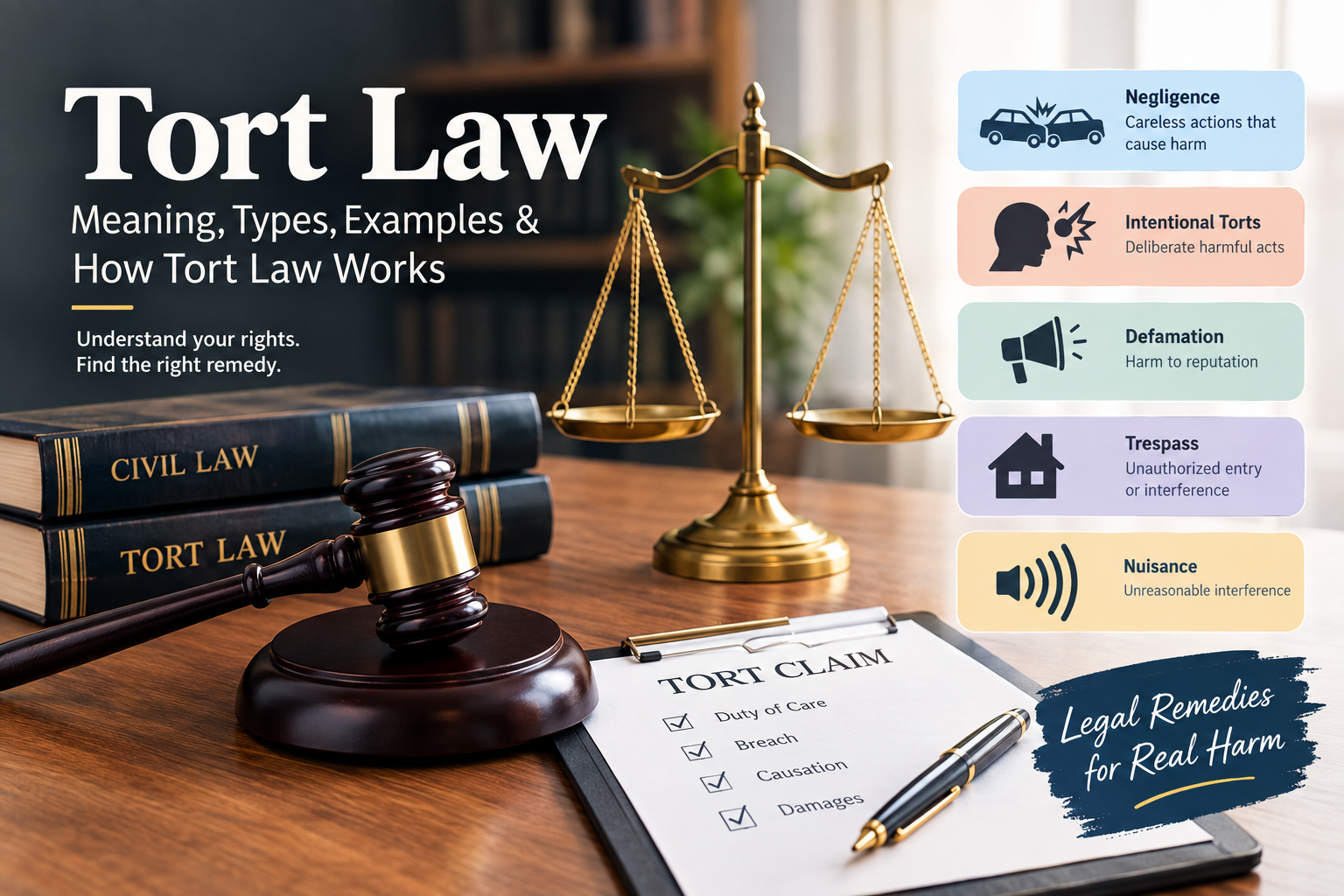
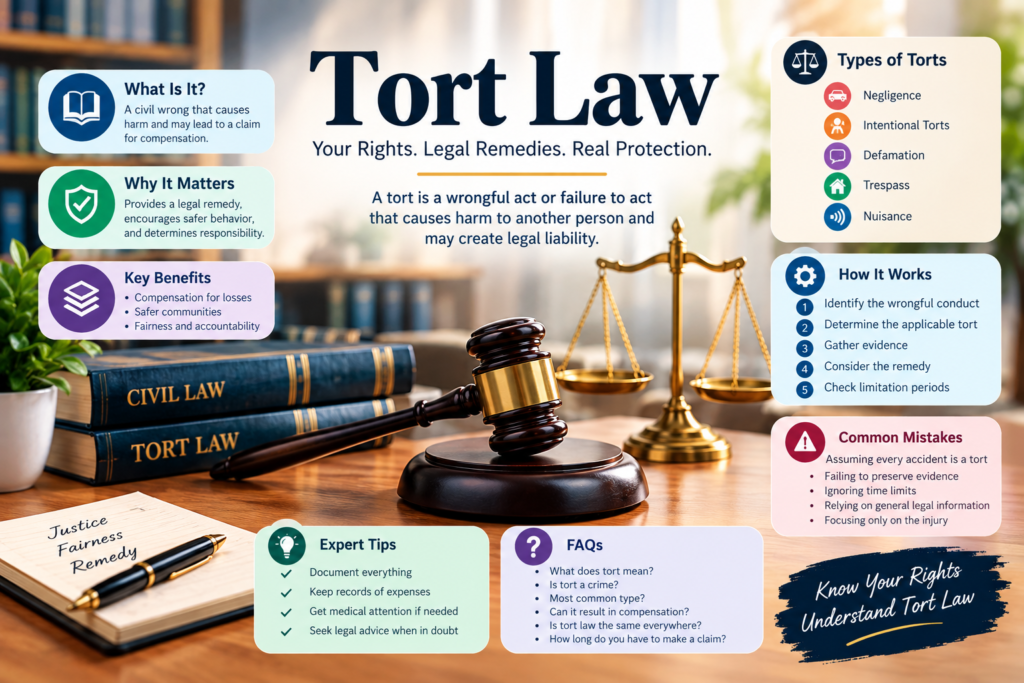
A tort is a wrongful act or failure to act that causes harm to another person and may create legal liability. Tort law gives injured people a way to seek a remedy, often through compensation for losses caused by someone else’s conduct.
Torts can arise in everyday situations, from careless driving and unsafe property conditions to harmful statements and intentional physical acts. The exact rules vary by jurisdiction, but the basic idea is consistent: when one person’s legally recognized interests are wrongfully harmed, the law may provide a remedy.
What Is a Tort?
A tort is generally a civil wrong, rather than a criminal offense. The person who suffers harm may bring a civil claim against the person or organization responsible.
For example, imagine a driver who carelessly runs a red light and hits another vehicle. If another person is injured or their property is damaged, the injured party may have a tort claim based on negligence.
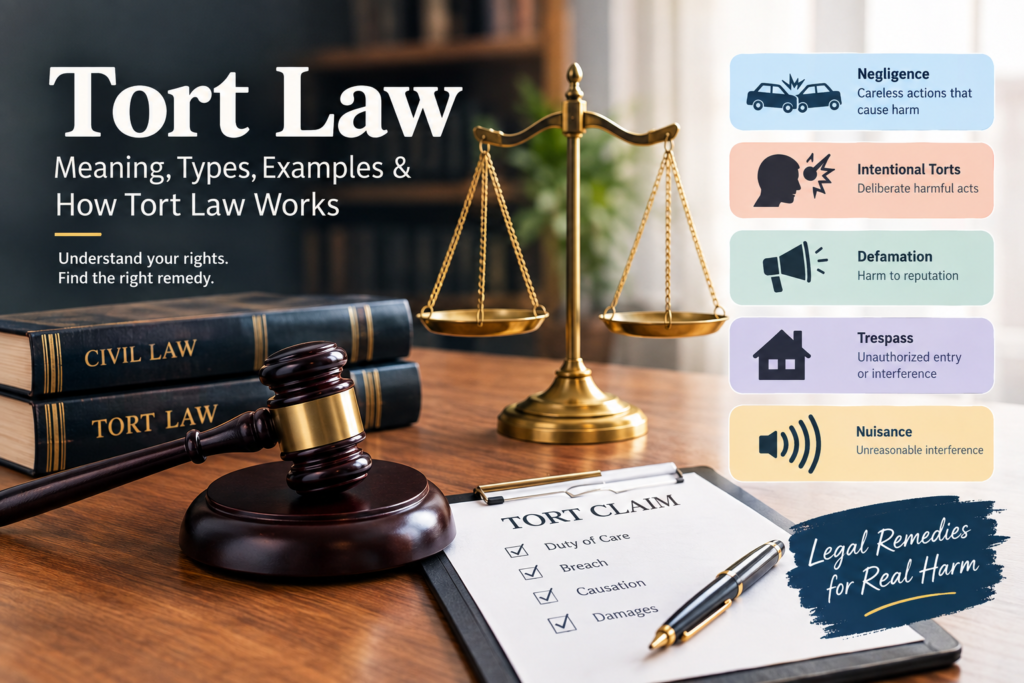
A tort claim usually focuses on questions such as:
- Did the defendant owe the claimant a legal duty?
- Did the defendant breach that duty or otherwise commit a wrongful act?
- Did the conduct cause the harm?
- Did the claimant suffer a legally recognized loss?
Not every accident automatically amounts to a tort. Liability depends on the applicable law and the specific facts.
Why Does Tort Law Matter?
Tort law serves several practical purposes. One is to provide a legal remedy when someone suffers harm because of another person’s wrongful conduct.
It can also encourage people and organizations to take reasonable care. A business that knows it may face liability for unsafe conditions has a reason to maintain its premises properly.
Tort law also helps determine responsibility when harm occurs. Instead of treating every accident as someone’s fault, courts examine the conduct, circumstances, evidence, and applicable legal rules.
Main Types of Torts
Torts are commonly divided into several categories. The names and legal tests can differ between countries, so these categories should be understood as general legal concepts.
Negligence
Negligence is one of the most common areas of tort law. It generally involves failing to exercise the level of reasonable care required in the circumstances.
A typical negligence claim may involve:
- A legal duty owed to the claimant
- A breach of that duty
- A connection between the breach and the harm
- Actual damage or loss
A simple example is a property owner failing to address a dangerous condition that reasonably should have been discovered and corrected, resulting in a visitor being injured.
Intentional Torts
Intentional torts involve conduct carried out deliberately, although the precise legal requirements depend on the particular tort.
Examples can include assault, battery, false imprisonment, trespass, and certain forms of intentional interference with another person’s rights.
Intentional does not always mean that the person intended the exact injury that occurred. The relevant question depends on the elements of the particular legal claim.
Defamation
Defamation generally concerns false statements that harm another person’s reputation. The rules can differ significantly depending on the jurisdiction, especially regarding public figures, opinion, truth, privilege, and freedom of expression.
Defamation may involve written or recorded statements, often called libel, or spoken statements, commonly referred to as slander.
Because freedom of speech and reputation laws vary, a potentially defamatory statement should be assessed under the law applicable to the situation.
Trespass
Trespass can involve intentionally entering another person’s property without lawful authorization. In some legal systems, related torts also protect against unauthorized interference with land or personal property.
The circumstances matter. Permission, necessity, legal authority, and other defenses can affect whether conduct creates liability.
Nuisance
Nuisance generally concerns unreasonable interference with a person’s use or enjoyment of land or certain related interests.
Examples may include persistent excessive noise, smoke, odors, or other activities that substantially interfere with neighboring property rights.
Whether conduct amounts to a nuisance depends on factors such as its seriousness, duration, location, and surrounding circumstances.
How Does a Tort Claim Work?
The process varies by jurisdiction, but a civil tort claim often follows a general pattern.
1. Identify the Wrongful Conduct
The first step is determining what happened and what legal right or interest may have been affected.
A claimant should record important details, including dates, locations, communications, photographs, medical records, receipts, and information about witnesses.
2. Determine the Applicable Tort
The facts need to be matched with the appropriate legal theory. An injury caused by careless conduct may involve negligence, while deliberately entering someone’s property may raise trespass issues.
More than one legal claim can sometimes arise from the same incident.
3. Establish Evidence
Evidence is often central to a tort claim. Depending on the circumstances, useful evidence may include:
- Photographs and videos
- Medical records
- Repair estimates
- Contracts and documents
- Emails or messages
- Witness statements
- Expert evidence
- Business or financial records
Good documentation can make it easier to establish what happened and what losses resulted.
4. Consider the Available Remedy
A successful tort claim may result in a remedy designed to address the harm suffered.
Compensation can potentially cover losses such as property damage, medical expenses, lost income, or other legally recognized damages. Some cases may involve non-monetary remedies or other forms of relief.
The amount and type of compensation depend on the facts and the law governing the claim.
5. Consider Time Limits
Tort claims are often subject to limitation periods or statutes of limitation. These rules restrict how long a person has to begin legal proceedings.
The deadline can differ depending on the type of claim, the jurisdiction, the identity of the parties, and when the harm was discovered.
Because missing a legal deadline can seriously affect a claim, obtaining jurisdiction-specific legal advice promptly can be important.
Common Mistakes in Tort Claims
People sometimes make avoidable mistakes after suffering harm.
Assuming Every Accident Is a Tort
An accident alone does not necessarily establish legal liability. There may be no breach of duty, no causation, or no legally compensable loss.
Failing to Preserve Evidence
Important evidence can disappear over time. Photographs, records, correspondence, receipts, and witness information should be preserved where appropriate.
Ignoring Limitation Periods
Waiting too long can prevent a claim from being brought. The applicable deadline should be checked as early as possible.
Relying on General Legal Information
Tort law is highly dependent on jurisdiction and facts. A rule that applies in one country or state may not apply somewhere else.
Focusing Only on the Injury
A claimant generally needs to establish more than the existence of harm. The connection between the defendant’s conduct and the legally recognized loss can be critical.
Tort vs Criminal Offense
Tort law and criminal law deal with different types of legal responsibility.
A tort is generally a civil wrong in which a claimant seeks a remedy against the responsible party. A crime is an offense prosecuted by the state.
The same event can sometimes result in both civil and criminal proceedings.
For example, deliberately causing physical harm could potentially lead to criminal prosecution while also giving the injured person grounds to pursue a civil claim. The standards, procedures, and remedies in the two systems are different.
Tort vs Contract
Tort and contract claims can also overlap, but they arise from different legal foundations.
A contract claim generally concerns obligations created by an agreement between parties. A tort claim generally concerns duties imposed by law, regardless of whether the parties entered into a contract.
For instance, a disagreement about whether a party performed a contractual promise may primarily involve contract law. A separate claim for careless conduct causing personal injury may potentially involve tort law.
In some situations, both contractual and tortious duties may be relevant.
Practical Tips After a Possible Tort
If someone believes they have suffered harm because of another person’s conduct, several practical steps may help:
- Write down what happened while the details are fresh.
- Preserve relevant documents and communications.
- Take appropriate photographs of damage or conditions.
- Keep records of expenses and financial losses.
- Obtain necessary medical attention after an injury.
- Avoid making unsupported public accusations about another party.
- Check the relevant limitation period.
- Seek advice from a qualified lawyer when the potential claim is significant or legally complex.
These steps do not guarantee a successful claim, but they can help preserve information needed to evaluate one.
Frequently Asked Questions About Tort
What does tort mean?
A tort is generally a civil wrong that causes legally recognized harm and may give the injured person a right to seek a legal remedy.
Is tort a crime?
Usually, no. A tort is generally a civil wrong, while a crime is an offense prosecuted by the state. However, the same conduct can sometimes create both civil and criminal consequences.
What is the most common type of tort?
Negligence is one of the most common areas of tort law. It generally concerns harm caused by a failure to exercise reasonable care.
Can a tort claim result in compensation?
Yes. Depending on the applicable law and facts, a successful tort claim may result in monetary compensation for qualifying losses and, in some cases, other remedies.
Is tort law the same in every country?
No. Tort law differs between jurisdictions. Legal terminology, required elements, defenses, damages, and limitation periods can vary considerably.
What is an example of a tort?
A common example is negligent driving that causes another person to suffer injury or property damage. Other examples include certain forms of trespass, defamation, and intentional physical interference.
How long do you have to make a tort claim?
There is no single deadline for every tort claim. Limitation periods vary according to the jurisdiction and type of claim, so the applicable deadline should be checked promptly.
Final Thoughts
A tort provides a legal framework for addressing many forms of civil wrongdoing and harm. Negligence, intentional wrongdoing, defamation, trespass, and nuisance are among the areas that may fall within tort law.
The key issue in any potential claim is not simply whether someone was harmed. It is whether the facts satisfy the legal requirements for a particular tort and whether a legally recognized remedy is available.
Because tort rules differ by jurisdiction, general information should not be treated as legal advice for a specific dispute. When substantial injury, financial loss, or an approaching legal deadline is involved, advice from a qualified lawyer in the relevant jurisdiction is appropriate.