

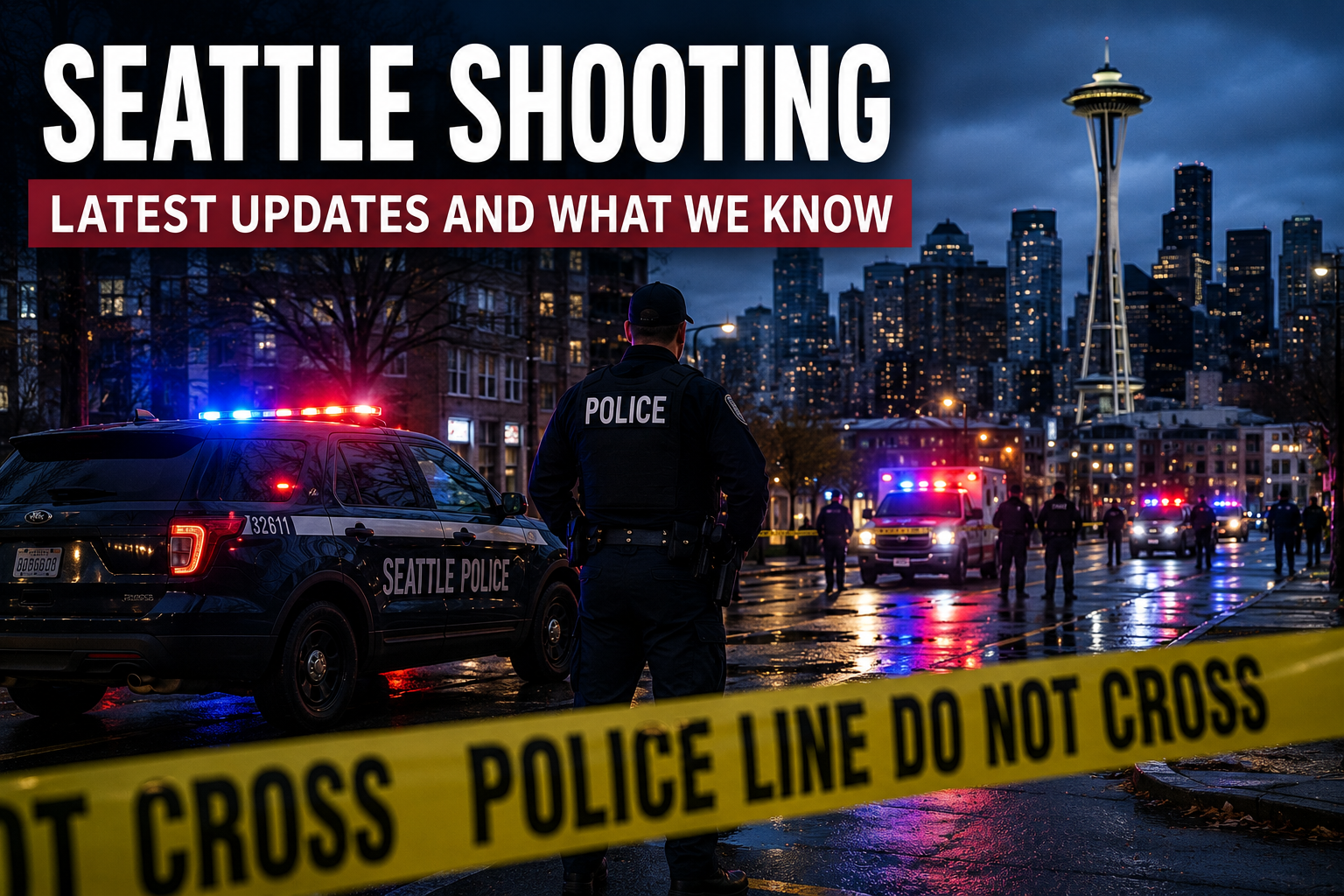
Incidents involving a Seattle shooting often generate widespread attention and many unanswered questions. In the hours following an event, information can change quickly as law enforcement interviews witnesses, gathers evidence, and confirms details.
This guide explains how shooting investigations typically unfold, what information is usually available to the public, and why it’s important to rely on verified updates instead of rumors shared online.
What Is the Seattle Shooting About?
A Seattle shooting refers to any firearm-related incident that takes place within the city of Seattle, Washington. These events can range from isolated disputes involving a small number of people to larger incidents that affect businesses, neighborhoods, or public gatherings.
When a shooting occurs, local authorities work to:
- Secure the area
- Provide medical assistance to victims
- Identify suspects
- Collect physical evidence
- Interview witnesses
- Inform the public when verified information becomes available
Because investigations evolve, early reports are often incomplete. Initial witness accounts may conflict, and police statements can change as new evidence emerges.
Why Accurate Information Matters
High-profile shootings often spread rapidly across social media. Unfortunately, not every post reflects verified facts.
Relying on official information helps prevent:
- Sharing incorrect victim identities
- Spreading false suspect descriptions
- Creating unnecessary panic
- Interfering with ongoing investigations
Local police departments usually provide updates once they have confirmed details rather than speculating during the early stages.
How Police Investigate a Seattle Shooting
Every investigation follows a process designed to establish what happened as accurately as possible.
Securing the Scene
The first priority is public safety. Officers secure the area so emergency medical teams can assist injured people and investigators can preserve evidence.
Collecting Evidence
Investigators may examine:
- Shell casings
- Firearms
- Surveillance video
- Vehicle information
- Physical evidence at the scene
Each piece of evidence helps reconstruct the sequence of events.
Interviewing Witnesses
Witness statements provide valuable context but are only one part of an investigation. Detectives compare multiple accounts alongside physical evidence before reaching conclusions.
Identifying Suspects
Police may release suspect descriptions, photographs, or vehicle information if doing so could assist the investigation without compromising public safety.
What Information Is Usually Released?
As an investigation progresses, authorities may confirm details such as:
- Time and location
- Number of people injured
- Fatalities, if any
- Whether a suspect has been arrested
- Public safety advisories
- Road closures
- Requests for witnesses or video footage
Some information remains confidential while investigators verify evidence or prepare criminal charges.
Community Impact
A shooting can affect more than those directly involved.
Communities may experience:
- Temporary business closures
- Increased police presence
- Traffic disruptions
- Emotional stress
- Community meetings focused on public safety
Schools, employers, and local organizations sometimes adjust schedules depending on the location and severity of the incident.
Staying Safe During an Active Emergency
If law enforcement reports an active shooting or ongoing threat:
- Leave the area immediately if it is safe.
- Follow instructions from emergency responders.
- Avoid blocked streets and restricted areas.
- Do not approach the investigation scene.
- Share only verified information from official sources.
- Contact emergency services if you have information that could assist investigators.
Personal safety should always come before gathering photos or videos.
Common Misconceptions
Early reports are always accurate
They are not. Initial reports often change as investigators verify evidence.
Social media always has the latest facts
Social platforms can spread information quickly, but speed does not guarantee accuracy.
Every shooting is random
Many investigations later reveal that incidents stem from specific disputes or circumstances. Until investigators finish their work, the motive may remain unknown.
Expert Tips for Following Breaking News
- Wait for official updates before drawing conclusions.
- Compare reports from multiple reputable news organizations.
- Be cautious of edited videos or screenshots shared without context.
- Remember that investigations can take days or weeks before all facts become public.
- Respect the privacy of victims and their families by avoiding speculation.
Final Thoughts
Whenever a Seattle shooting occurs, people naturally want immediate answers. However, the most reliable information comes from official investigators and established news organizations after facts have been confirmed.
While breaking news develops quickly, investigations require careful evidence gathering, witness interviews, and forensic analysis. Waiting for verified updates helps reduce misinformation and provides a clearer understanding of what actually happened.
Frequently Asked Questions
1. What should I do if I am near a Seattle shooting?
Leave the area if it is safe, follow police instructions, and call emergency services if you have relevant information.
2. Where can I find verified updates about a Seattle shooting?
Check official statements from local law enforcement and established news organizations rather than relying solely on social media.
3. Why do details change after a shooting?
Investigators confirm evidence over time, so early reports may be revised as new information becomes available.
4. Are witness accounts always accurate?
Not necessarily. Stress and limited visibility can affect what witnesses remember, which is why investigators compare multiple sources of evidence.
5. How long does a shooting investigation usually take?
Simple cases may progress quickly, while complex investigations involving multiple witnesses or forensic evidence can take weeks or longer.
6. Can the public help investigators?
Yes. Witnesses, surveillance footage, and tips submitted to law enforcement can be valuable if shared through official channels.
7. Why don’t police release all information immediately?
Authorities may withhold certain details to protect the investigation, preserve evidence, or avoid influencing witness testimony.