

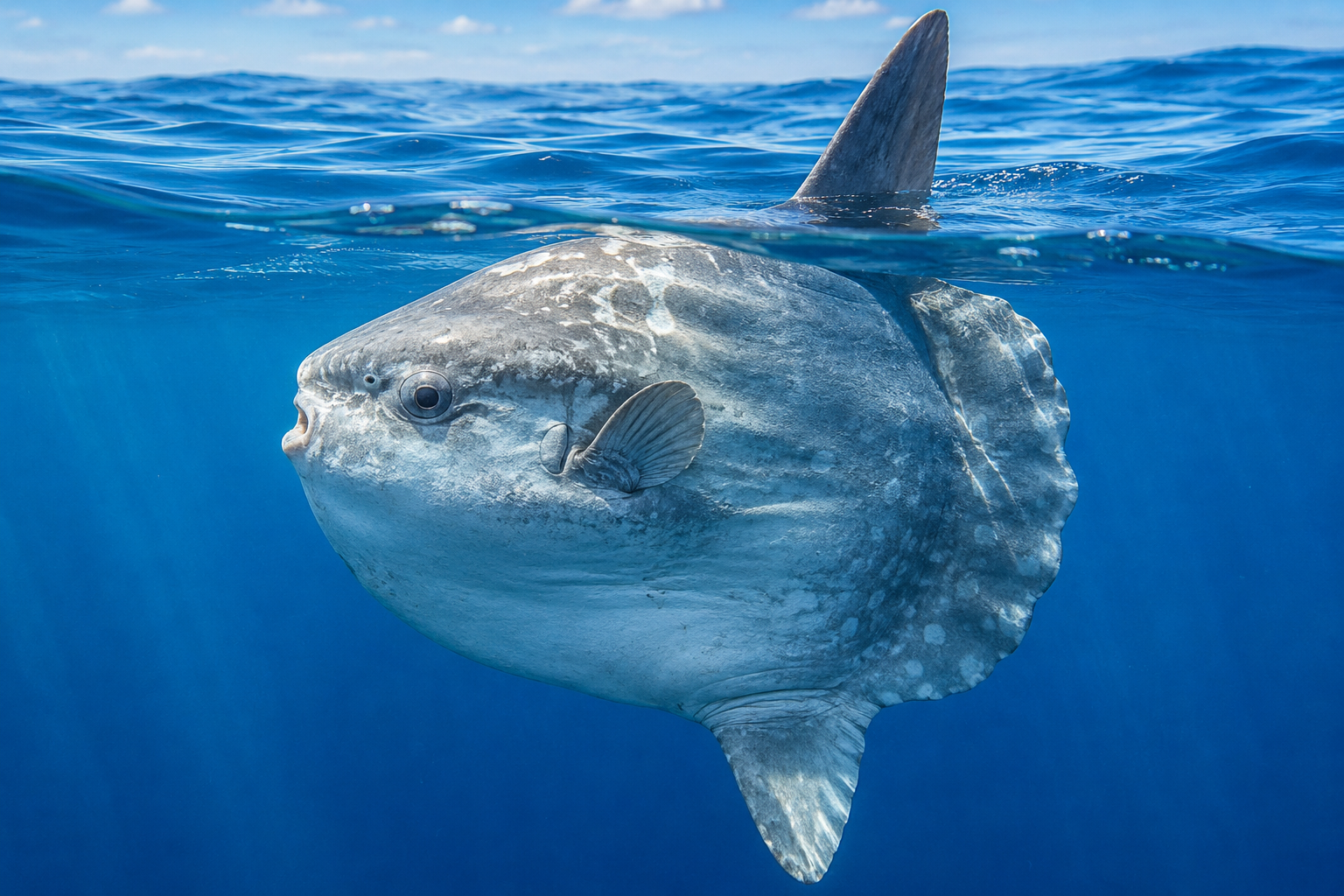
Discover fascinating sunfish facts, habitat, diet, size, and behavior. Learn why the ocean sunfish is one of the world’s most unusual marine animals.
The sunfish, also known as the ocean sunfish (Mola mola), is one of the most fascinating creatures in the sea. Its round, flattened body and enormous size make it unlike almost any other fish. Although it may appear slow and awkward, the sunfish has evolved to thrive in oceans around the world.
Many people first notice a sunfish because of its unusual shape or the way it floats near the ocean’s surface. Scientists have studied this remarkable species for years, yet it continues to surprise researchers with its behavior, migration patterns, and incredible growth rate.
If you’ve ever wondered what makes the sunfish so unique, this guide covers everything from its habitat and diet to its role in the marine ecosystem.
What Is a Sunfish?
The ocean sunfish belongs to the Molidae family and is the heaviest known bony fish on Earth. Unlike sharks, which have skeletons made mostly of cartilage, sunfish have true bones.
Instead of a traditional tail, the sunfish has a rounded structure called a clavus, which helps it steer through the water. Its body is tall and flat, giving it a distinctive disc-like appearance.
Despite its massive size, the sunfish feeds mainly on soft-bodied prey and spends much of its time traveling through open oceans.
Why the Sunfish Matters
Sunfish play an important role in maintaining healthy marine ecosystems.
By feeding on jellyfish and other small marine organisms, they help keep certain populations in balance. Their long-distance migrations also provide scientists with valuable information about changing ocean temperatures and marine biodiversity.
Because they are sensitive to environmental changes, researchers often use sunfish as indicators of ocean health.
Physical Characteristics
The ocean sunfish is easy to recognize because of several unique features:
- Large, flattened body
- Tall dorsal and anal fins
- Small mouth with fused teeth
- Thick, rough skin
- Short, rounded tail-like clavus
Adult sunfish can weigh well over a ton, making them the largest living bony fish known today.
Where Do Sunfish Live?
Sunfish inhabit temperate and tropical oceans around the world.
They are commonly found in:
- The Atlantic Ocean
- The Pacific Ocean
- The Indian Ocean
- The Mediterranean Sea
Although they often swim near the surface, they regularly dive hundreds of meters below the water in search of food.
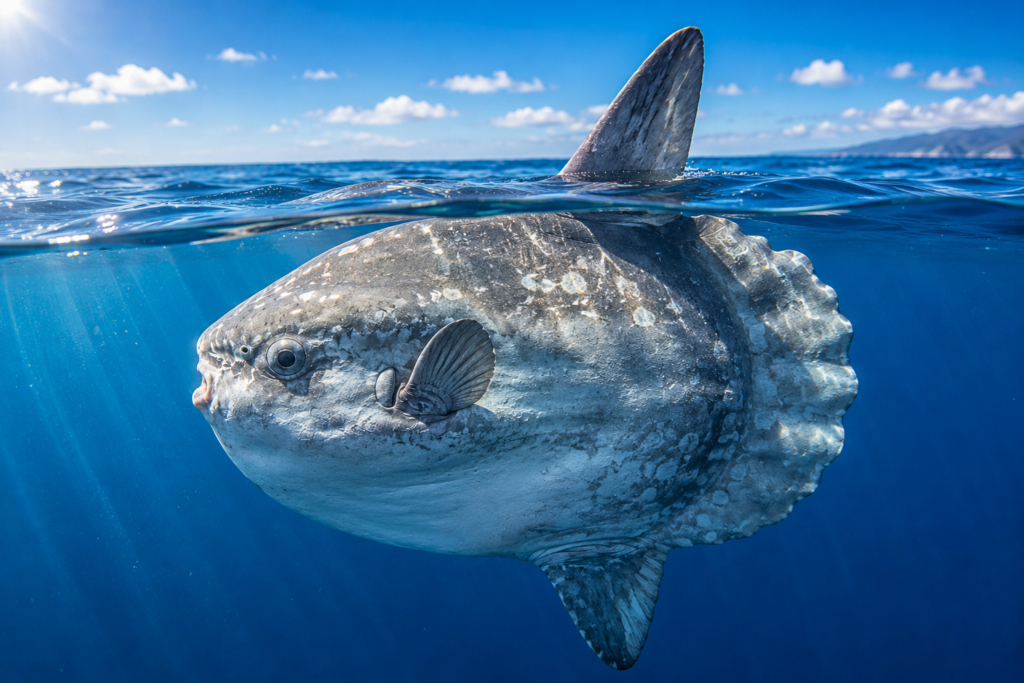
After deep dives into colder water, sunfish are frequently seen lying near the surface with their fins exposed. Scientists believe this behavior helps them warm their bodies in sunlight, which is one reason they are called “sunfish.”
What Do Sunfish Eat?
A common misconception is that sunfish eat only jellyfish. While jellyfish are an important part of their diet, they consume a much wider variety of prey.
Their diet includes:
- Jellyfish
- Small fish
- Squid
- Crustaceans
- Plankton
- Salps
- Small marine invertebrates
This varied diet helps them survive in different ocean environments throughout the year.
How Big Can a Sunfish Grow?
One of the most remarkable facts about the sunfish is its size.
Young sunfish hatch from tiny eggs, but they grow at an extraordinary rate during their early years.
Fully grown adults may:
- Reach several meters in height from fin to fin.
- Weigh more than 2,000 kilograms (over 4,400 pounds) in exceptional cases.
- Live for many years in the wild.
Their rapid growth is one reason marine biologists find them so interesting.
Interesting Sunfish Behaviors
Sunfish display several unusual behaviors that continue to intrigue scientists.
Surface Basking
One of their most recognizable habits is floating sideways near the ocean’s surface. Researchers believe this helps regulate body temperature after deep dives.
Deep Diving
Despite appearing slow, sunfish regularly travel into deeper, colder waters to search for food before returning to warmer surface layers.
Cleaning Stations
Sunfish often visit reefs where smaller fish remove parasites from their skin. Seabirds have also been observed feeding on parasites while the fish float near the surface.Common Misconceptions About Sunfish
They Are Dangerous
Sunfish are generally harmless to humans. They do not hunt people and are not considered aggressive.
They Are Poor Swimmers
Their movements may seem slow, but they are capable of traveling long distances across entire ocean basins.
They Eat Only Jellyfish
Their diet is much more varied than many people realize.
Threats to Sunfish
Like many marine animals, sunfish face several challenges.
These include:
- Plastic pollution
- Accidental capture in fishing gear
- Marine debris
- Habitat changes linked to climate change
Conservation efforts focus on reducing bycatch, protecting marine ecosystems, and improving ocean health.
Expert Tips for Learning About Sunfish
If you’d like to observe or learn more about sunfish, consider these suggestions:
- Visit reputable aquariums with marine education programs.
- Watch documentaries produced by trusted wildlife organizations.
- Support ocean conservation initiatives.
- Avoid disturbing wildlife during diving or boating trips.
- Learn from scientific sources rather than relying solely on social media posts.
These approaches provide a more accurate understanding of this remarkable species.
Final Thoughts
The sunfish is one of the ocean’s most extraordinary animals. Its unusual body shape, impressive size, and fascinating behaviors make it a favorite subject for marine researchers and wildlife enthusiasts alike.
Although much has been discovered about the ocean sunfish, scientists continue to study its migration patterns, feeding habits, and role in marine ecosystems. Protecting healthy oceans will help ensure future generations can continue to learn from this unique species.
Frequently Asked Questions
1. What is a sunfish?
A sunfish is a large marine fish belonging to the Molidae family. The best-known species is the ocean sunfish (Mola mola).
2. Why is it called a sunfish?
It is often seen basking near the ocean’s surface after deep dives, where sunlight may help warm its body.
3. Is a sunfish dangerous to humans?
No. Ocean sunfish are generally harmless and are not known to attack people.
4. What does a sunfish eat?
Sunfish feed on jellyfish, squid, plankton, crustaceans, salps, and other small marine animals.
5. How large can a sunfish become?
The ocean sunfish is the world’s largest bony fish, with some individuals weighing over 2,000 kilograms.
6. Where can sunfish be found?
They live in tropical and temperate oceans, including the Atlantic, Pacific, Indian Oceans, and the Mediterranean Sea.
7. Are sunfish endangered?
Some sunfish populations face threats from fishing bycatch, pollution, and habitat changes, making marine conservation important.