

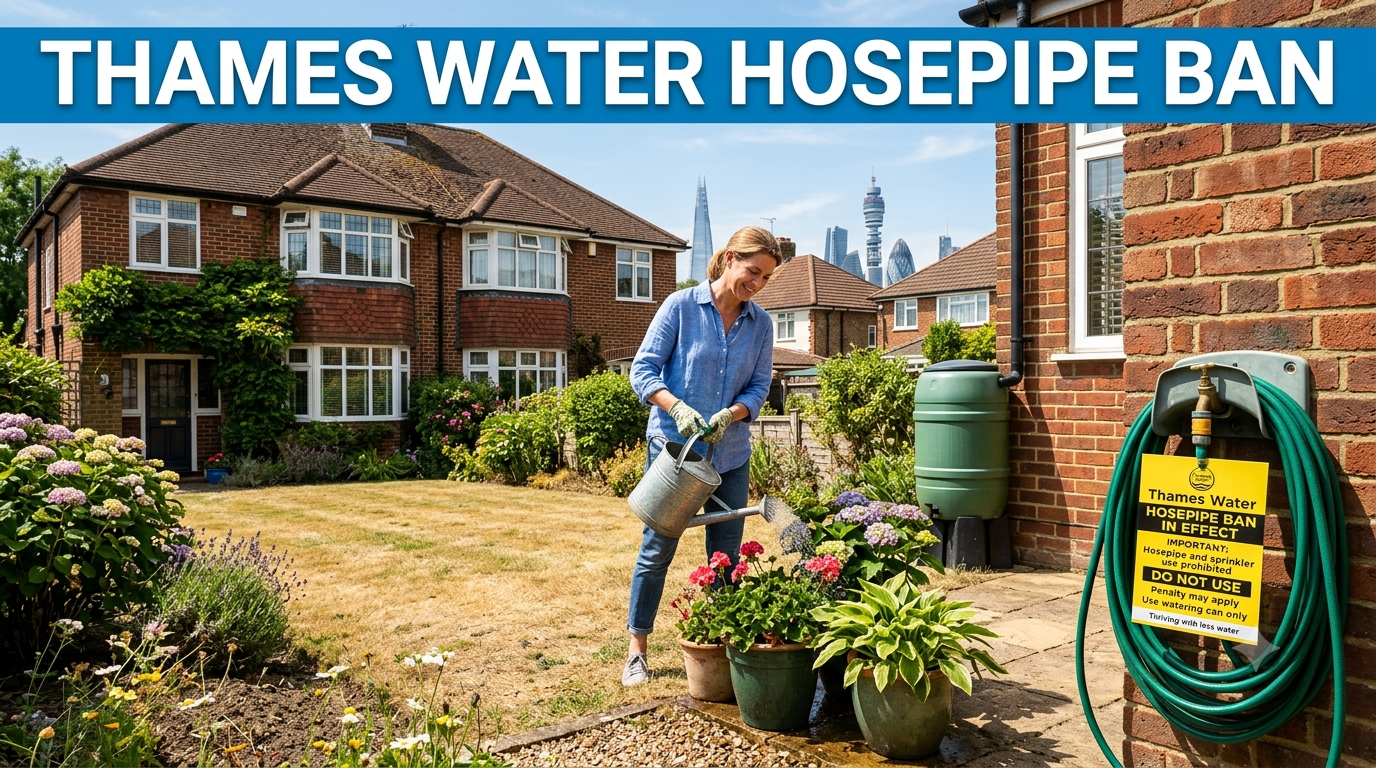
The Thames Water hosepipe ban is a temporary water-use restriction introduced to protect water supplies during prolonged periods of hot, dry weather. When demand for water rises and reservoir levels fall, Thames Water may introduce a Temporary Use Ban (TUB) to help maintain essential supplies for homes, businesses, and emergency services. In July 2026, the company introduced a hosepipe ban affecting around 10 million customers across London, the Thames Valley, and surrounding areas due to exceptionally dry conditions.
If you live in an affected area, understanding the rules can help you avoid penalties while continuing to care for your home and garden responsibly.
What Is a Thames Water Hosepipe Ban?
A hosepipe ban is a legal restriction that temporarily limits the use of hosepipes and similar equipment connected to the mains water supply.
The goal is simple: reduce unnecessary water use during periods when demand is unusually high and water resources are under pressure.
These restrictions remain in place until water levels recover and the risk to supplies has eased.
Why Was the Ban Introduced?
The decision followed:
- Prolonged dry weather
- Record-breaking heatwaves
- Low rainfall
- Increased household water demand
- Pressure on reservoirs and rivers
During hot weather, household water use can increase dramatically as people water gardens, wash vehicles, and fill paddling pools. The temporary ban helps protect essential drinking water supplies.
Areas Affected
The Thames Water hosepipe ban applies to many customers supplied by Thames Water across:
- London
- Thames Valley
- Parts of the Home Counties
The exact coverage depends on your water supplier rather than your postcode alone, so households should check whether Thames Water supplies their property.
Activities That Are Restricted
During the ban, you generally cannot use a hosepipe for:
- Watering gardens or lawns
- Washing private cars
- Cleaning patios or driveways
- Filling paddling pools
- Filling ornamental ponds (with limited exceptions)
- Cleaning outdoor walls or windows with a hose
- Using sprinklers connected to the mains water supply
These restrictions also apply to pressure washers connected to a hose.
What You Can Still Do
The ban does not stop all outdoor water use.
You can usually:
- Water plants using a watering can
- Use stored rainwater
- Wash your car with a bucket and sponge
- Drink water as normal
- Cook, shower, and wash clothes
- Water certain food crops where exemptions apply
Using water wisely remains encouraged even where activities are still permitted.
Are There Any Exemptions?
Yes. Some households and organisations may qualify for exemptions.
These can include:
- Customers on the Priority Services Register
- Some disabled customers
- Essential business activities
- Certain health and safety uses
- Welfare of fish or other aquatic animals in specific circumstances
Eligibility depends on Thames Water’s published rules.
What Happens If You Ignore the Ban?
Ignoring a hosepipe ban may lead to enforcement action.
People who repeatedly break the restrictions can face fines of up to £1,000 under water industry legislation, although water companies generally encourage compliance before taking enforcement action.
Water-Saving Tips for Homeowners
Simple changes can make a noticeable difference.
Consider:
- Collecting rainwater in water butts
- Watering plants early in the morning or late evening
- Fixing dripping taps promptly
- Taking shorter showers
- Running washing machines only with full loads
- Using buckets instead of hosepipes where possible
These habits reduce water consumption even after restrictions are lifted.
Common Mistakes
Many people accidentally break the rules because they assume some activities are allowed.
Avoid:
- Using pressure washers connected to the mains
- Washing cars with a hosepipe
- Watering lawns with sprinklers
- Filling paddling pools using a hose
- Assuming every exemption applies automatically
If you’re unsure, check the latest guidance before using a hosepipe.
Expert Tips
To stay prepared during future dry periods:
- Install a water butt for rainwater collection.
- Choose drought-tolerant plants for your garden.
- Repair leaks around your property quickly.
- Keep informed about local water restrictions.
- Reduce unnecessary outdoor water use even before restrictions begin.
Small changes from many households can help protect local water supplies.
Final Thoughts
The Thames Water hosepipe ban is a temporary measure designed to protect water supplies during periods of exceptional demand and dry weather. While the restrictions may require some adjustments, most daily household activities continue as normal.
By following the rules and adopting simple water-saving habits, UK homeowners can help safeguard essential water resources while avoiding unnecessary fines.
Frequently Asked Questions
What is the Thames Water hosepipe ban?
It is a temporary restriction that limits certain uses of hosepipes to conserve water during dry conditions.
Which areas are affected?
The ban applies to many Thames Water customers across London, the Thames Valley, and surrounding areas supplied by the company.
Can I water my garden during the ban?
You generally cannot use a hosepipe, but you can usually water plants with a watering can or stored rainwater.
Can I wash my car?
You should not use a hosepipe, but washing your car with a bucket and sponge is generally allowed.
What is the fine for breaking the hosepipe ban?
People who breach the restrictions may face fines of up to £1,000.
When will the hosepipe ban end?
The restrictions remain in place until Thames Water determines that water supplies have recovered sufficiently.