

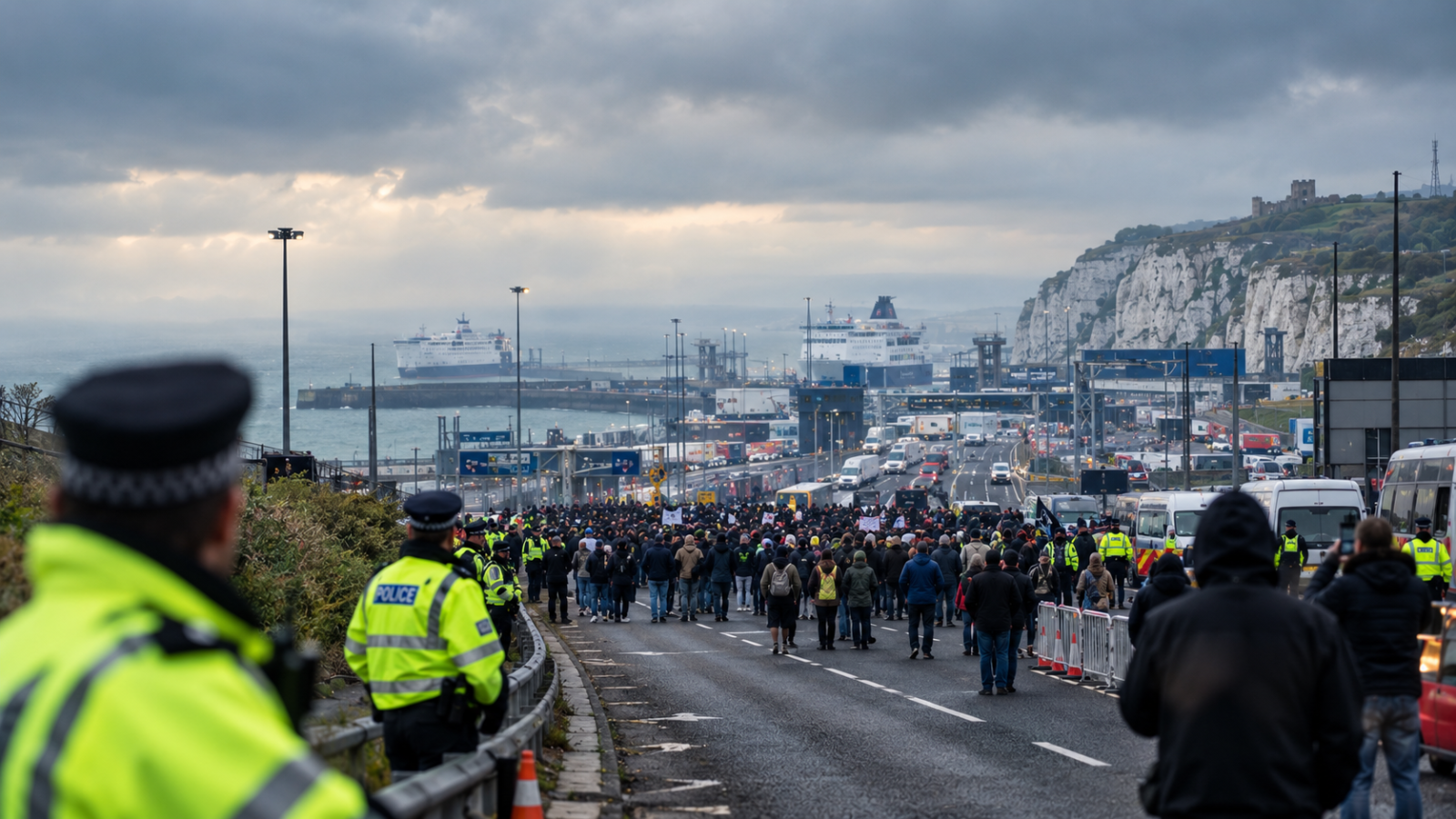
The Dover protests on September 5, 2026, brought major disruption to one of the UK’s busiest transport hubs. Hundreds of protesters, many dressed in black and wearing face coverings, gathered around roads leading to the Port of Dover and blocked access for a period of several hours.
The demonstration was connected to anger over illegal migration and small-boat crossings across the English Channel. Protesters used the slogan “Stop the Boats” as they blocked roads around the port. The action quickly became a national political story because of its scale, the use of masks and the disruption caused to travellers and freight.
Here’s what is known about the protest, why Dover became the focus and what questions remain.
What Happened During the Dover Protests?
The protest began early on Saturday, September 5, near the Port of Dover in Kent.
The UK government later told Parliament that around 150 people arrived at the port at approximately 7:30am, with many wearing face coverings. Other reports described the crowd as numbering in the hundreds at its peak.
Protesters blocked roads leading toward the port, including the A20. This created significant congestion and disrupted normal access to the ferry terminal.
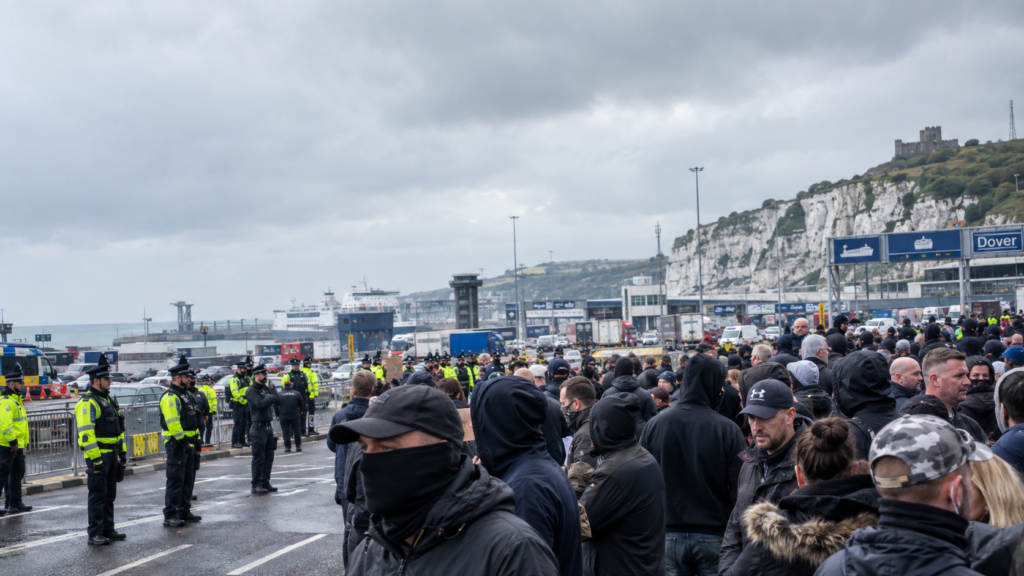
National Highways reported substantial traffic problems, while the Port of Dover later confirmed that access had returned to normal.
Many protesters wore black clothing and balaclavas. Videos from the scene showed groups linking arms across roads and chanting anti-migration slogans.
Why Did the Dover Protests Happen?
The main issue behind the demonstration was opposition to illegal migration and small-boat crossings across the English Channel.
Dover has a particularly strong connection to the migration debate because of its location on the Kent coast and its role as a major gateway between Britain and France.
However, the protest was not simply a discussion or conventional political rally. Blocking roads into an international port created practical consequences for people who were travelling, working or moving goods.
The government condemned the disruption and stressed that people have the right to peaceful protest but that demonstrations must remain within the law.
Who Was Behind the Protest?
The demonstration was publicly associated with Patriot Platform, an anti-immigration group linked by multiple reports to the far right.
Daniel Thomas, also known as Danny Tommo, has been identified in reporting as a key figure behind the organisation and the Dover action. The Irish Times reported that the group launched the protest as part of a more confrontational form of anti-migration activism.
There has also been disagreement over how the protest should be described.
Some local officials said the organisation appeared highly coordinated, while Kent Police initially described the demonstration as a “no-notice” or spontaneous protest. The difference between those descriptions has led to questions about whether authorities had sufficient warning.
How Did Police Respond?
Kent Police deployed officers to the area and engaged with protesters as the roads were blocked.
No arrests were reported during the Dover demonstration, despite the disruption caused by the road blockade. Traffic was eventually restored and the port returned to normal operations.
The police response has since attracted criticism from some local representatives.
Dover District Council leader Kevin Mills said the initial police presence appeared too low and questioned whether authorities should have known about the planned gathering in advance.
The government, meanwhile, has emphasised the need to protect public order while maintaining the right to lawful protest.
How Did the Protest Affect Dover?
The immediate effect was disruption.
Roads around the port were blocked, creating delays for motorists, ferry passengers and freight traffic. Reports described several miles of congestion and delays on routes approaching the port.
Dover is particularly sensitive to transport disruption because the port handles large numbers of passengers and commercial vehicles travelling between the UK and continental Europe.
For ordinary travellers, even a protest lasting only several hours can create missed sailings, longer journeys and uncertainty.
The disruption also affects local residents who rely on the same roads for everyday travel.
What Happened After the Dover Demonstration?
The Dover protest was followed by another anti-migrant demonstration in Portsmouth over the weekend.
That second event involved protesters attempting to obstruct the movement of asylum seekers who had arrived after crossing the Channel. The government strongly condemned the behaviour and described the actions as intimidating and unacceptable.
The two incidents have increased concerns about whether similar demonstrations could occur at other locations associated with small-boat arrivals.
Campaigners have warned that further disruption could follow if organisers believe the Dover action was successful.
Why Dover Matters in the UK Migration Debate
Dover is more than a location appearing in political headlines.
Its geography makes it an important part of Britain’s relationship with continental Europe. The port connects the UK with France and supports passenger and freight movement every day.
That means immigration protests in Dover can quickly become wider public-order events.
The demonstrations also highlight a difficult political balance. Some people are deeply concerned about illegal migration and believe the government should take stronger action. At the same time, blocking major roads or intimidating people can affect residents and travellers who have nothing to do with immigration policy.
Understanding both sides is important when assessing the events.
Common Misconceptions About the Dover Protests
The protest was simply a normal political rally
Not quite.
Although the protesters were expressing political views, the road blockades caused substantial disruption around the port. That practical impact is one reason the event received national attention.
Everyone involved was arrested
No. Kent Police reported no arrests during the Dover protest.
The protest permanently closed the Port of Dover
It did not.
Port operations returned to normal after the disruption, although travellers experienced delays while access roads were blocked.
The protest happened in isolation
The Dover event was part of a wider weekend of anti-migrant protest activity, including the later demonstration in Portsmouth.
What Could Happen Next?
The biggest unanswered question is whether similar protests will be repeated.
Campaigners have warned that organisers may attempt further actions, particularly in areas where migrants arrive or are transferred for processing.
For police, the challenge will be balancing several competing responsibilities: protecting the right to lawful protest, preventing roads and essential infrastructure from being unlawfully blocked, and keeping residents and travellers safe.
For local communities, the concern is more immediate. Repeated demonstrations could create traffic problems, increase tension and place additional pressure on local police resources.
Frequently Asked Questions
What are the Dover protests about?
The Dover protests are demonstrations primarily focused on opposition to illegal migration and small-boat crossings across the English Channel. The September 2026 protest caused significant disruption around the Port of Dover.
When did the Dover protest happen?
The major protest discussed here took place on Saturday, September 5, 2026, around the Port of Dover in Kent.
Why were protesters wearing balaclavas?
Many protesters wore face coverings, including balaclavas. Their use became a major part of the public debate surrounding the demonstration, with politicians and commentators questioning the safety and intimidation concerns associated with masked protesters.
Was the Port of Dover closed?
The port itself was not permanently closed. Protesters blocked access roads, causing serious disruption, but normal operations later resumed.
Were arrests made during the Dover protests?
No arrests were reported during the main Dover demonstration on September 5.
Who organised the Dover protests?
The protest was associated with Patriot Platform, with Daniel Thomas, also known as Danny Tommo, identified in reporting as a central organiser.
Did the Dover protests affect travellers?
Yes. Road blockades caused congestion and delays for people travelling to and from the port, including ferry passengers and freight traffic.
Could there be more protests?
There is a possibility of further demonstrations. Campaigners have warned that the organisers could repeat similar actions, although the timing and location of any future protest cannot be predicted with certainty.
Final Thoughts
The Dover protests have become an important part of the UK’s ongoing debate about migration, public order and the right to protest.
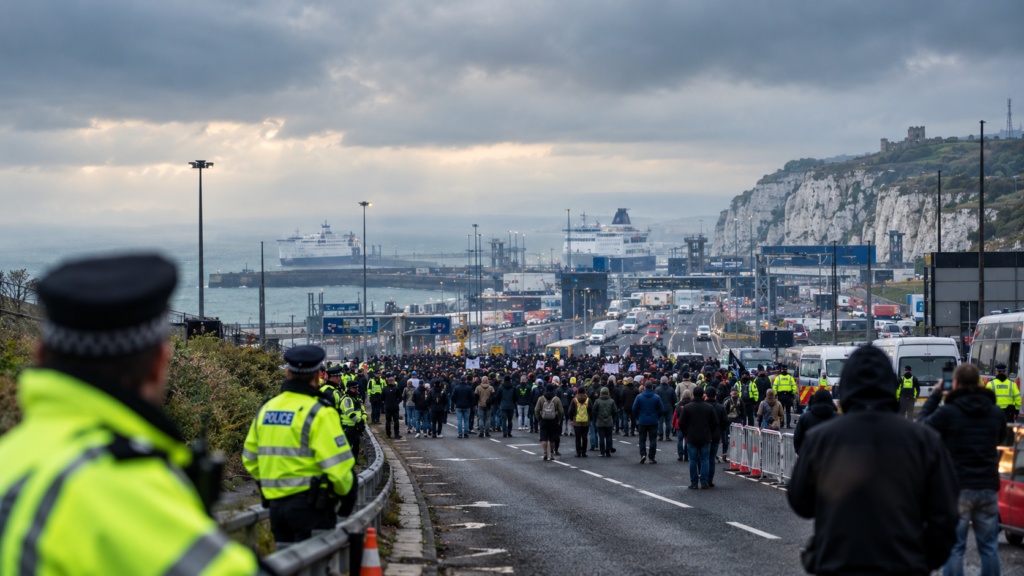
The September 2026 demonstration showed how quickly a protest over immigration can affect an entire town when major transport routes are blocked. It also raised questions about police preparedness, the use of face coverings and how authorities should respond to coordinated demonstrations.
For now, the most important point is to separate confirmed facts from political claims and online speculation. The situation is still developing, and further information from police, government officials and local authorities may change the picture.