

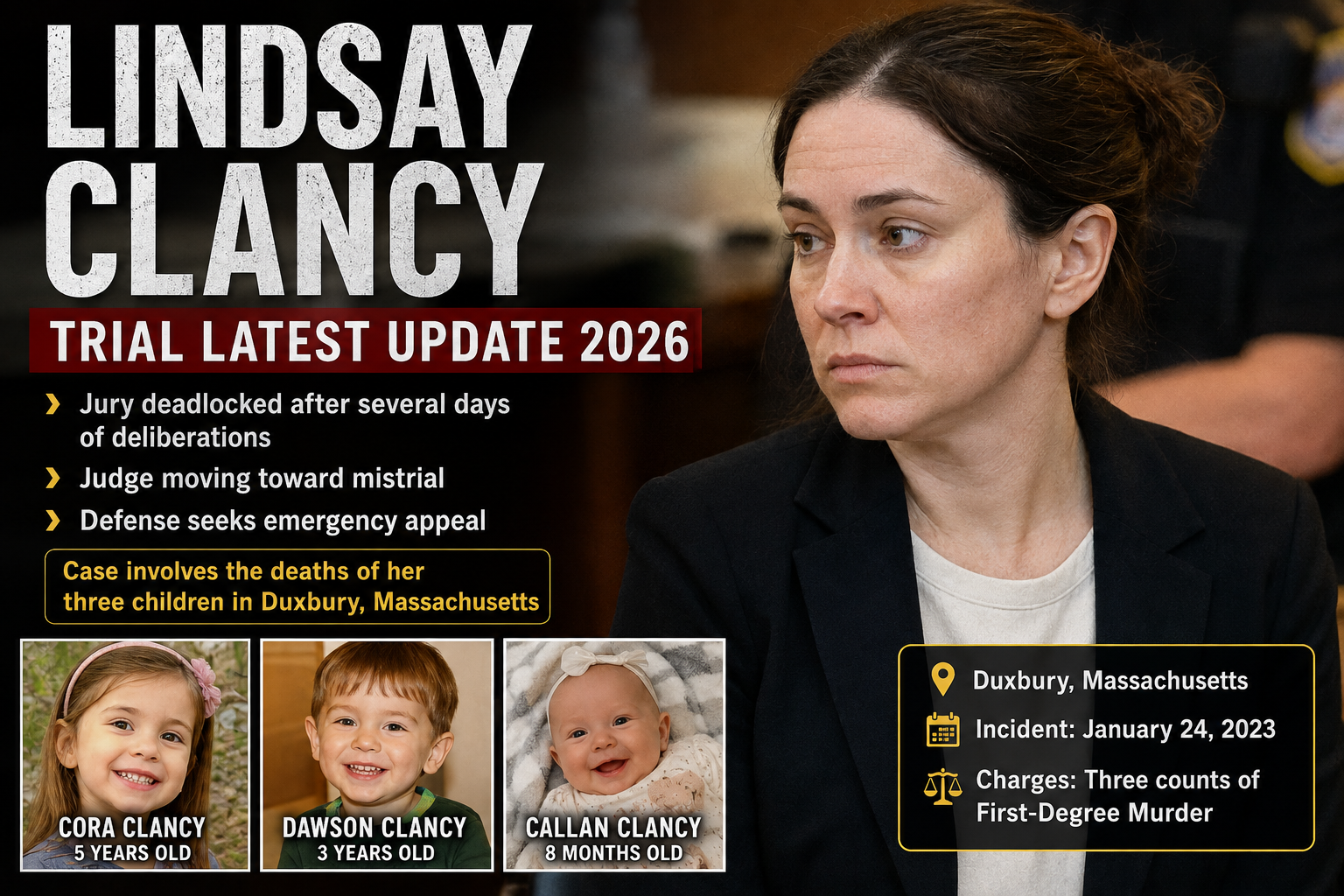
The Lindsay Clancy case has reached another major turning point in Massachusetts. The former labor and delivery nurse has been on trial over the deaths of her three young children in Duxbury in January 2023. While both sides have acknowledged that Clancy caused the children’s deaths, the central question at trial has been whether she should be held criminally responsible for her actions.
After days of jury deliberations, jurors remained unable to reach a unanimous decision. On September 4, 2026, the judge moved toward declaring a mistrial after the jury remained deadlocked. Clancy’s defense team sought an emergency appeal before the mistrial could formally proceed.
The case has received national attention because it combines a tragic family death with difficult questions about postpartum mental illness, psychiatric treatment, and criminal responsibility.
What Happened in the Lindsay Clancy Case?
The case began on January 24, 2023, when Clancy’s three children died at the family’s home in Duxbury, Massachusetts.
The children were:
- Cora Clancy, age 5
- Dawson Clancy, age 3
- Callan Clancy, 8 months old
Clancy survived a suicide attempt following the killings and was left paralyzed. She has remained at a state hospital while the criminal case proceeded.
Clancy later admitted that she killed her children, but her legal defense has focused on whether she was mentally capable of understanding her actions or being legally responsible for them at the time.
That distinction became the central issue of the 2026 trial.
Why Is Lindsay Clancy on Trial?
Clancy faced three counts of first-degree murder connected to the deaths of her children.
Prosecutors and defense attorneys have agreed on an important basic fact: Clancy caused the deaths.
However, they strongly disagree about why she did it and whether she was criminally responsible.
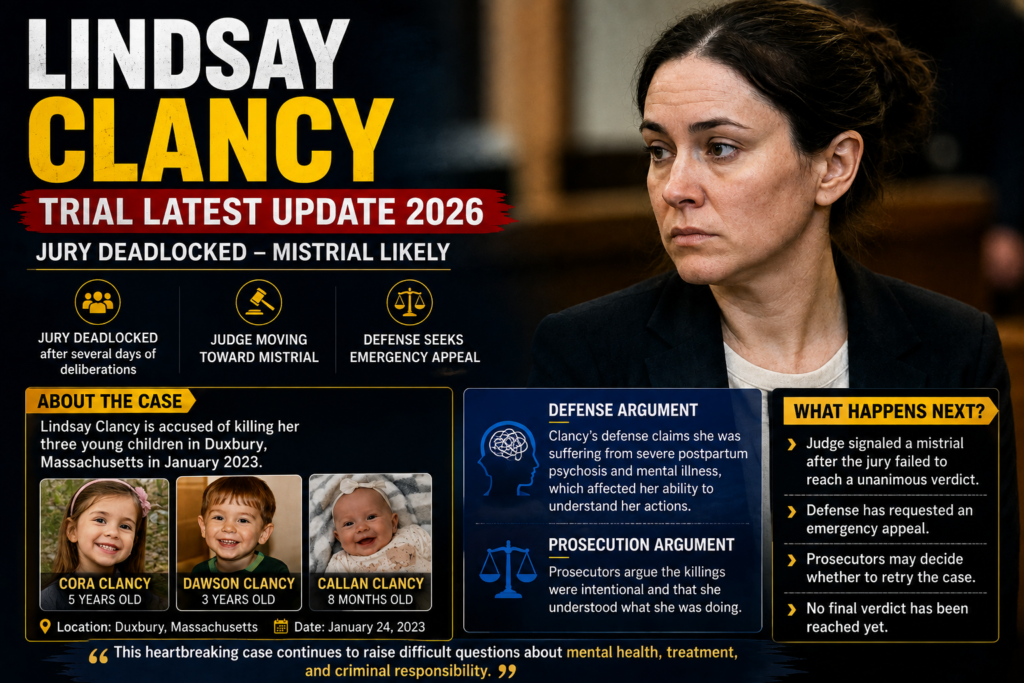
The prosecution argued that the killings were deliberate and that Clancy understood what she was doing. Prosecutors presented evidence they said showed planning and awareness before the deaths.
The defense presented a very different explanation. Her attorney argued that Clancy was experiencing a severe mental health crisis, including postpartum psychosis, and that medication and inadequate treatment contributed to her condition.
This disagreement made mental state the most important issue for the jury.

“Latest updates on the Lindsay Clancy trial — shared by IT Backlink Admin on The Daily Nook.”
Lindsay Clancy and the Postpartum Psychosis Defense
One of the most closely watched parts of the Lindsay Clancy trial has been the discussion of postpartum psychosis.
Postpartum psychosis is a rare but serious psychiatric condition that can occur after childbirth. It can involve symptoms such as delusions, hallucinations, severe confusion, and a loss of contact with reality.
Clancy’s defense argued that her mental condition became increasingly serious after the birth of her youngest child.
According to trial testimony reported by news organizations, Clancy experienced serious sleep problems and disturbing thoughts and sought professional treatment before the January 2023 deaths. She was also prescribed psychiatric medications and spent time receiving inpatient treatment.
The defense argued that these circumstances showed she was suffering from a severe psychiatric disorder.
Prosecutors, however, disputed the extent of her psychosis and argued that she understood the nature and wrongfulness of her actions.
What Did Prosecutors Argue?
The prosecution’s case focused heavily on evidence they said demonstrated planning and awareness.
Prosecutors presented testimony and other evidence concerning Clancy’s activities before the killings. They argued that she created an opportunity to be alone with the children and knew what she was doing.
The prosecution also challenged the defense’s interpretation of Clancy’s mental health history.
Their argument was not simply that Clancy was mentally unwell. Instead, prosecutors sought to show that being depressed or experiencing mental health difficulties did not necessarily mean she lacked criminal responsibility.
That distinction was crucial because the jury had to evaluate her mental state at the time of the killings, rather than simply determine whether she had experienced mental health problems.
What Did the Defense Argue?
Clancy’s defense team argued that severe postpartum mental illness affected her ability to understand reality and control her behavior.
Defense attorney Kevin Reddington emphasized her worsening psychiatric condition and the treatment she received before the deaths.
The defense also argued that medications and the handling of her mental health care contributed to her deterioration.
A psychologist who testified for the defense described experiences that were consistent with psychosis, including a reported voice that influenced Clancy’s behavior.
The defense therefore asked jurors to consider whether Clancy should be found not criminally responsible rather than convicted of murder.
What Happened During Jury Deliberations?
The jury began deliberating on August 27, 2026, after weeks of testimony and closing arguments.
The deliberations continued for several days without producing a unanimous verdict.
By September 4, jurors had remained deadlocked despite additional instructions from the judge encouraging them to continue discussing the case.
Reports indicated that the jury could not reach the unanimous decision required in the criminal case. The judge therefore moved toward declaring a mistrial. Clancy’s attorney requested an emergency appeal before that could happen.
What Does a Mistrial Mean?
A mistrial does not mean that Clancy has been found guilty or innocent.
Instead, it means the current trial ended without the required verdict.
Depending on what happens with the legal proceedings, prosecutors could potentially seek another trial. Other legal outcomes could also be possible, depending on future court decisions.
The latest development therefore does not represent a final resolution of the Lindsay Clancy case.
Could Lindsay Clancy Be Tried Again?
A retrial may be possible after a mistrial, but what happens next depends on the court and prosecutors.
The prosecution could decide to pursue another trial on the murder charges. The defense could continue challenging aspects of the proceedings or seek other legal remedies.
Because the situation was still developing on September 4, 2026, readers should avoid treating speculation about a future trial as a confirmed outcome.
The key point is that there was no final murder verdict in the current proceeding when the judge moved toward declaring a mistrial.
Why the Lindsay Clancy Case Has Received So Much Attention
The Lindsay Clancy case has attracted widespread attention for several reasons.
1. The Deaths of Three Young Children
The ages of the children made the case especially devastating and drew significant public attention.
2. Questions About Postpartum Mental Health
The case has renewed discussion about severe postpartum mental illness and whether people experiencing serious psychiatric symptoms receive appropriate treatment.
3. Criminal Responsibility
The trial also raises an important legal question: when someone commits a serious crime during a severe mental health crisis, when should that person be considered legally responsible?
4. A Divided Legal Argument
The prosecution and defense presented sharply different interpretations of the same broad circumstances, making the jury’s decision particularly difficult.
What Happens Next in the Lindsay Clancy Case?
The immediate legal question is whether the mistrial will stand and what prosecutors and the defense will do afterward.
The defense has sought an emergency appeal related to the judge’s decision. If the mistrial proceeds, prosecutors may have to decide whether to retry the case.
For readers following the story, it is important to distinguish between confirmed court decisions and possible future outcomes.
At this point, the Lindsay Clancy case remains unresolved.
Frequently Asked Questions
Is Lindsay Clancy guilty?
There was no final guilty verdict in the trial discussed above. The jury remained deadlocked, leading the judge toward a mistrial.
What happened to Lindsay Clancy’s children?
Her three children—Cora, Dawson, and Callan—died at the family’s Duxbury, Massachusetts, home in January 2023.
What is Lindsay Clancy accused of doing?
Clancy is accused of killing her three children in January 2023. She has admitted causing their deaths, while her defense disputes her criminal responsibility because of her mental state.
What was Lindsay Clancy’s defense?
Her defense argued that she was suffering from severe postpartum mental illness, including postpartum psychosis, and therefore should not be held criminally responsible.
What did prosecutors argue?
Prosecutors argued that Clancy intentionally killed her children and understood what she was doing. They challenged the defense’s argument that she lacked criminal responsibility.
What does mistrial mean?
A mistrial means the current trial ended without a final verdict. In some circumstances, prosecutors can seek a new trial.
Will Lindsay Clancy have another trial?
A retrial is possible, but it should not be described as certain until prosecutors and the court take further action.
Where was Lindsay Clancy’s trial held?
The case was heard in Plymouth Superior Court in Massachusetts.
Why is postpartum psychosis important in this case?
Postpartum psychosis became a central part of the defense argument because the defense claimed Clancy’s severe mental health condition affected her ability to understand reality and control her actions.
Is the Lindsay Clancy case over?
No final criminal verdict resolved the case in the current proceeding. The jury deadlock and move toward a mistrial leave the legal situation unresolved.
Conclusion
The Lindsay Clancy case remains unresolved after the jury failed to reach a unanimous verdict following days of deliberation. The central dispute throughout the trial has been whether Clancy should be held criminally responsible for the deaths of her three children or whether severe postpartum mental illness prevented her from being legally responsible.
With the judge moving toward a mistrial and the defense seeking an emergency appeal, the next stage of the case could determine whether prosecutors pursue another trial. For now, there is no final criminal verdict, making the Lindsay Clancy case one of the most closely watched U.S. legal stories of 2026.
Call to Action
Want to stay informed about major court cases, breaking news, and stories that matter? Keep reading the dailynook for clear, easy-to-understand coverage of the latest news and trending topics.