

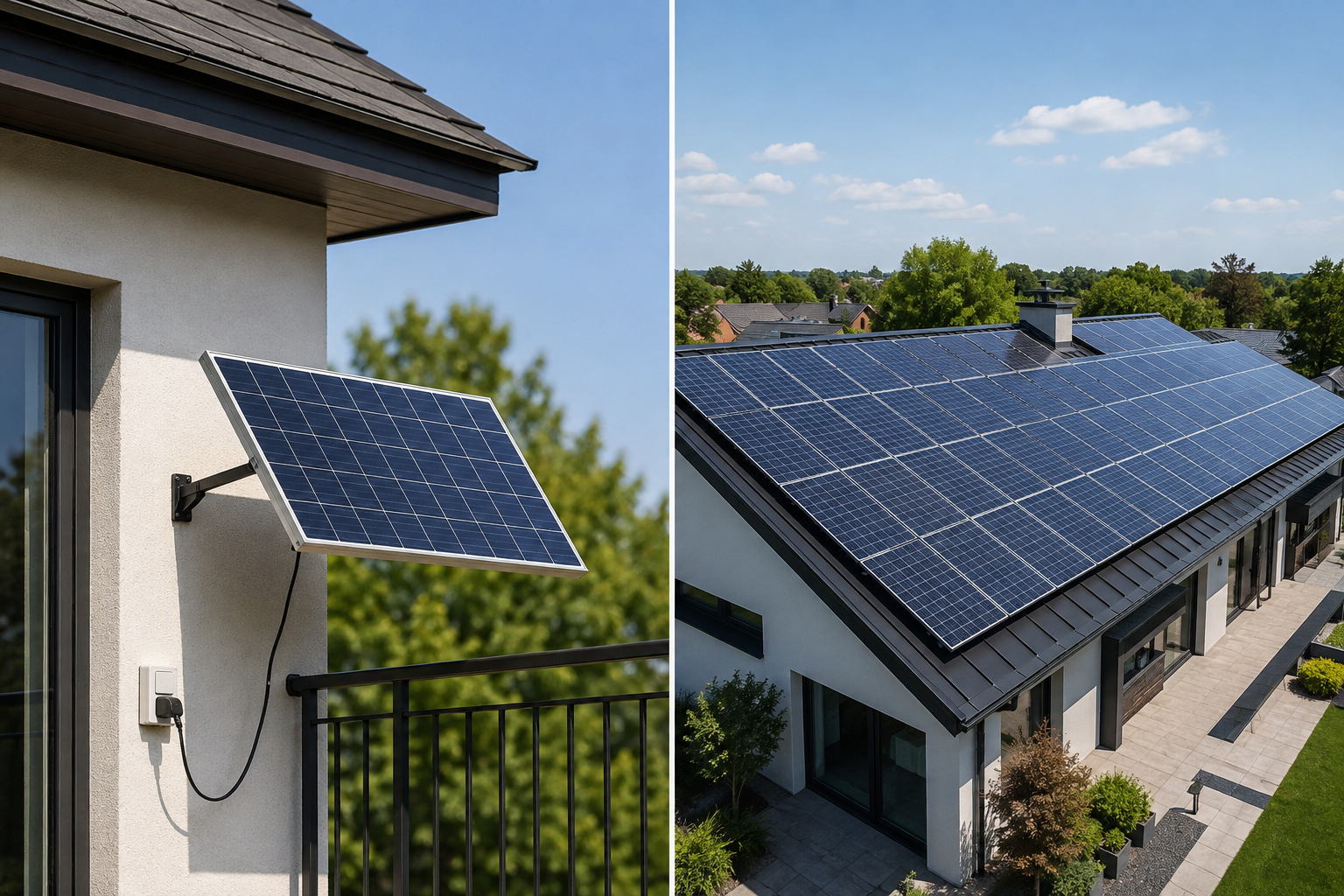
Solar power is no longer limited to large rooftop systems. Plug in solar panels offer a simpler approach for people who want to generate some electricity without committing to a full solar installation.
These systems are designed to connect solar-generated electricity to a suitable electrical setup, depending on the type of product and local electrical rules. They can be useful for small energy needs, but they are not automatically a replacement for a professionally installed rooftop solar system.
Before buying one, it helps to understand how the technology works, what it can realistically power, and where safety concerns come in.
What Are Plug In Solar Panels?
Plug in solar panels are small or modular solar power systems designed for relatively simple installation and use. Instead of building a large rooftop array with a dedicated inverter and extensive wiring, some products are designed around a compact solar panel, inverter, mounting equipment, and connection system.
The exact setup varies considerably between products.
Some plug-in systems are intended to power individual devices or charge a battery. Others are designed to feed electricity into a building’s electrical system through a connection method permitted by local regulations.
That distinction matters. A portable solar generator that charges through a solar panel is very different from a grid-connected system that supplies electricity to household circuits.
How Do Plug In Solar Panels Work?
The basic process is straightforward:
- Solar panels capture sunlight.
- The panels produce direct current (DC) electricity.
- An inverter converts the electricity into alternating current (AC) when required.
- The system supplies electricity to the intended load or electrical system.
- Any additional electricity may be stored in a battery or, with an approved grid-connected system, handled according to the local electrical arrangement.
The amount of electricity produced depends on several factors, including panel size, sunlight, shading, orientation, temperature, and system efficiency.
A small panel receiving strong sunlight can produce useful energy, but it will not necessarily generate enough electricity to run high-demand appliances continuously.
Why Consider Plug In Solar Panels?
The main attraction is simplicity.
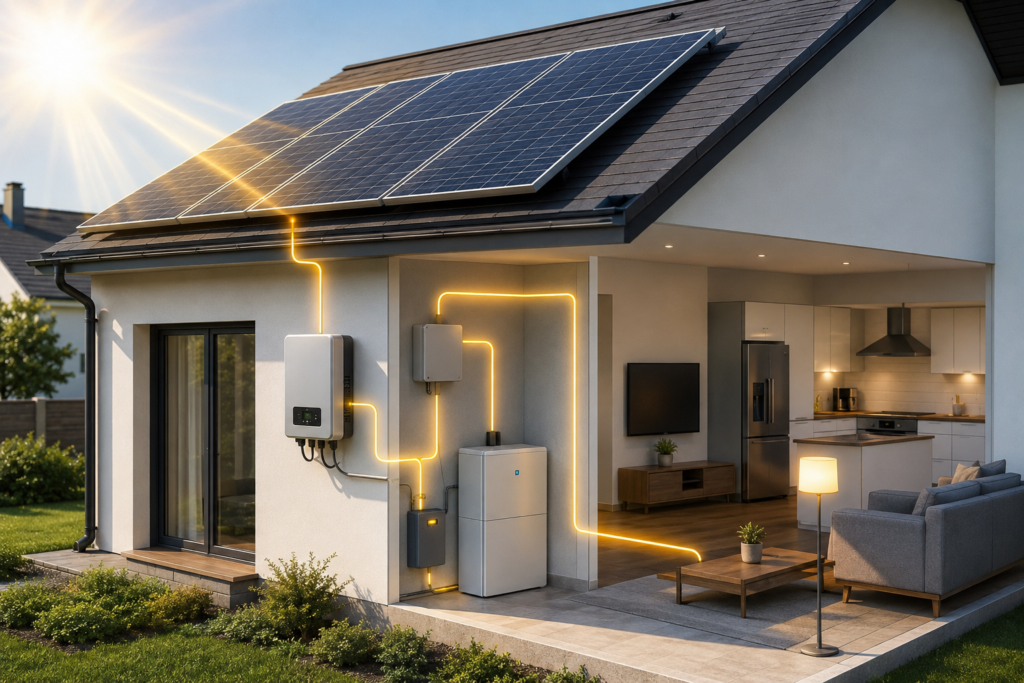
A traditional rooftop solar system can involve structural assessment, mounting equipment, wiring, an inverter, electrical protection, permits, and professional installation. A smaller plug-in solution may require less equipment and a lower initial commitment.
They can also make sense for people who want to experiment with solar before investing in a larger system.
For example, someone might use a small solar setup to support lighting, electronics, charging, or a battery rather than attempting to power an entire house.
Key Benefits of Plug In Solar Panels
Lower Entry Barrier
A small solar setup can be easier to consider than a complete rooftop installation. You can start with a limited amount of generation and expand later if the system supports it.
Useful for Small Loads
Plug-in or portable solar equipment can be practical for devices that do not consume large amounts of electricity.
Phones, laptops, lights, routers, small fans, and similar loads may be more realistic targets than air conditioners, electric heaters, or water heaters.
Flexible Placement
Some systems can be positioned on balconies, terraces, gardens, sheds, or other suitable locations. However, placement must still provide adequate sunlight and comply with local safety requirements.
Potentially Easier Maintenance
A small system generally has fewer components than a large solar array. Keeping panels clean and checking cables, connectors, mounts, and equipment can help maintain reliable operation.
Useful During Outdoor Activities
Portable solar panels can also be paired with batteries for camping, travel, remote work, or locations where access to conventional electricity is limited.
What Can Plug In Solar Panels Power?
This depends on the system’s output and whether a battery is included.
Lower-power equipment may support:
- LED lighting
- Smartphones and tablets
- Laptops
- Wi-Fi routers
- Small electronics
- Cameras
- Portable power stations
- Small DC appliances
Higher-power appliances require substantially more energy.
An air conditioner, refrigerator, electric kettle, microwave, iron, or water heater can draw much more power than a phone charger. A small solar panel may not be suitable for running these appliances directly.
The better approach is to calculate the appliance’s power demand in watts and compare it with the solar system’s usable output.
Plug In Solar Panels vs. Traditional Solar Systems
The two approaches solve different problems.
| Feature | Plug-In/Small Solar System | Traditional Rooftop Solar |
|---|---|---|
| System size | Usually smaller | Usually larger |
| Installation | May be simpler, depending on design | Typically professional |
| Initial commitment | Lower for small systems | Higher |
| Energy production | Limited | Much greater |
| Battery option | Often available | Optional |
| Whole-home power | Usually unsuitable | Designed for larger loads |
| Electrical requirements | Product and location dependent | Professionally designed |
A plug-in system is not necessarily “better” than rooftop solar. It is simply a different type of solution.
Safety Comes First
This is the part that should not be overlooked.
Do not assume that a solar panel can safely be connected to any household wall outlet. Grid-connected solar equipment must be designed for the electrical system it is connected to and must meet applicable safety standards and local regulations.
Improper connections can create risks involving:
- Electric shock
- Overloaded circuits
- Electrical fires
- Equipment damage
- Unsafe backfeeding
- Problems during grid outages
Use equipment designed for the intended connection method and follow the manufacturer’s instructions. Where grid connection or building wiring is involved, consult a qualified electrician and check the requirements of your local utility or electrical authority.
Common Mistakes to Avoid
Buying Based Only on Panel Wattage
A panel’s advertised wattage does not mean it will produce that amount of electricity all day.
Sunlight changes throughout the day, and shading, temperature, orientation, and other losses affect real-world production.
Ignoring Shading
A panel placed behind trees, walls, or nearby buildings may produce significantly less energy than one receiving unobstructed sunlight.
Check the location at different times of day before installing the system.
Expecting It to Power Everything
Small solar systems are often marketed around convenience. That does not mean they can handle every household appliance.
Calculate your energy needs first.
Using Poor-Quality Cables or Connectors
Solar systems involve electrical current and outdoor exposure. Damaged, incompatible, or poorly secured components can create serious problems.
Use compatible equipment and inspect outdoor connections regularly.
Forgetting Local Rules
Electrical and grid-connection requirements vary by location. A product that is permitted in one country or region may have different requirements elsewhere.
Check local regulations before connecting any solar system to household wiring.
How to Choose the Right System
Start with your actual goal.
If you mainly want to charge small electronics, a portable solar panel and battery may be enough.
If you want to reduce household electricity consumption, calculate your daily energy use and determine how much solar generation you need.
Consider these factors before buying:
Panel capacity: Higher capacity can produce more electricity under suitable conditions.
Battery capacity: A battery allows energy generated during sunny periods to be used later.
Inverter: Check its continuous and peak output if you plan to operate AC appliances.
Mounting: The panel needs a stable, suitable location with good solar exposure.
Weather resistance: Outdoor equipment should be designed for the environment where it will be installed.
Warranty and support: A clear warranty can be valuable if equipment develops a fault.
Local compliance: Confirm that the complete system and its connection method are allowed where you live.
Are Plug In Solar Panels Worth It?
They can be, but the answer depends on what you expect from them.
For small-scale electricity generation, portable power, or testing solar before making a larger investment, they can be a practical option.
For a household trying to significantly reduce its electricity bill or operate several high-power appliances, a properly designed rooftop solar system may make more sense.
The biggest mistake is comparing systems purely by purchase price. What matters is how much usable electricity the system produces, how safely it operates, and whether it matches your actual energy requirements.
Expert Tips for Better Solar Performance
Keep panels reasonably clean, but follow the manufacturer’s cleaning recommendations rather than using harsh chemicals or abrasive tools.
Position panels where they receive as much direct sunlight as practical. Even partial shading can affect output depending on the system design.
Monitor production if your equipment provides monitoring data. A sudden drop in output can sometimes reveal shading, dirt, connection problems, or equipment faults.
If you are considering a grid-connected system, have the electrical arrangement assessed by a qualified professional instead of improvising a connection.
Most importantly, choose a complete system based on your energy needs rather than buying the largest panel you can afford.
Frequently Asked Questions
1. Are plug in solar panels safe?
They can be safe when they are properly designed, installed, and used according to the manufacturer’s instructions and local electrical requirements. Never make an improvised connection to household wiring.
2. Can plug in solar panels power a whole house?
Small plug-in systems generally are not designed to supply an entire home. Whole-home solar usually requires a properly sized array, inverter, electrical protection, and appropriate installation.
3. Do plug in solar panels work without direct sunlight?
They can generate some electricity in bright or indirect light, but output is generally much lower than under strong direct sunlight.
4. Do plug in solar panels need a battery?
Not always. A battery is useful when you want to store solar energy and use it later, especially after sunset or during periods of low sunlight.
5. Can I install plug in solar panels myself?
It depends on the product and local rules. Portable, self-contained equipment may be designed for user setup, while systems involving household wiring or grid connection may require professional installation or approval.
6. How long do plug in solar panels last?
The lifespan varies by panel, inverter, battery, and other components. Check the manufacturer’s specifications and warranty rather than assuming every component will last the same length of time.
7. Are plug in solar panels a good alternative to rooftop solar?
They can be useful for smaller energy needs, but they generally should not be viewed as a direct replacement for a properly designed rooftop system.
Final Thoughts
Plug in solar panels can provide a convenient entry point into solar energy, particularly for small devices, portable power, and limited electricity needs.
Their biggest advantage is flexibility, but their limitations are just as important. Output is affected by sunlight, system size, shading, and equipment efficiency, while grid-connected applications require careful attention to electrical safety and local regulations.
Before buying, work out what you actually want the system to power. Once you know your energy needs, choosing between a small solar setup, a battery system, or a full rooftop installation becomes much easier.