

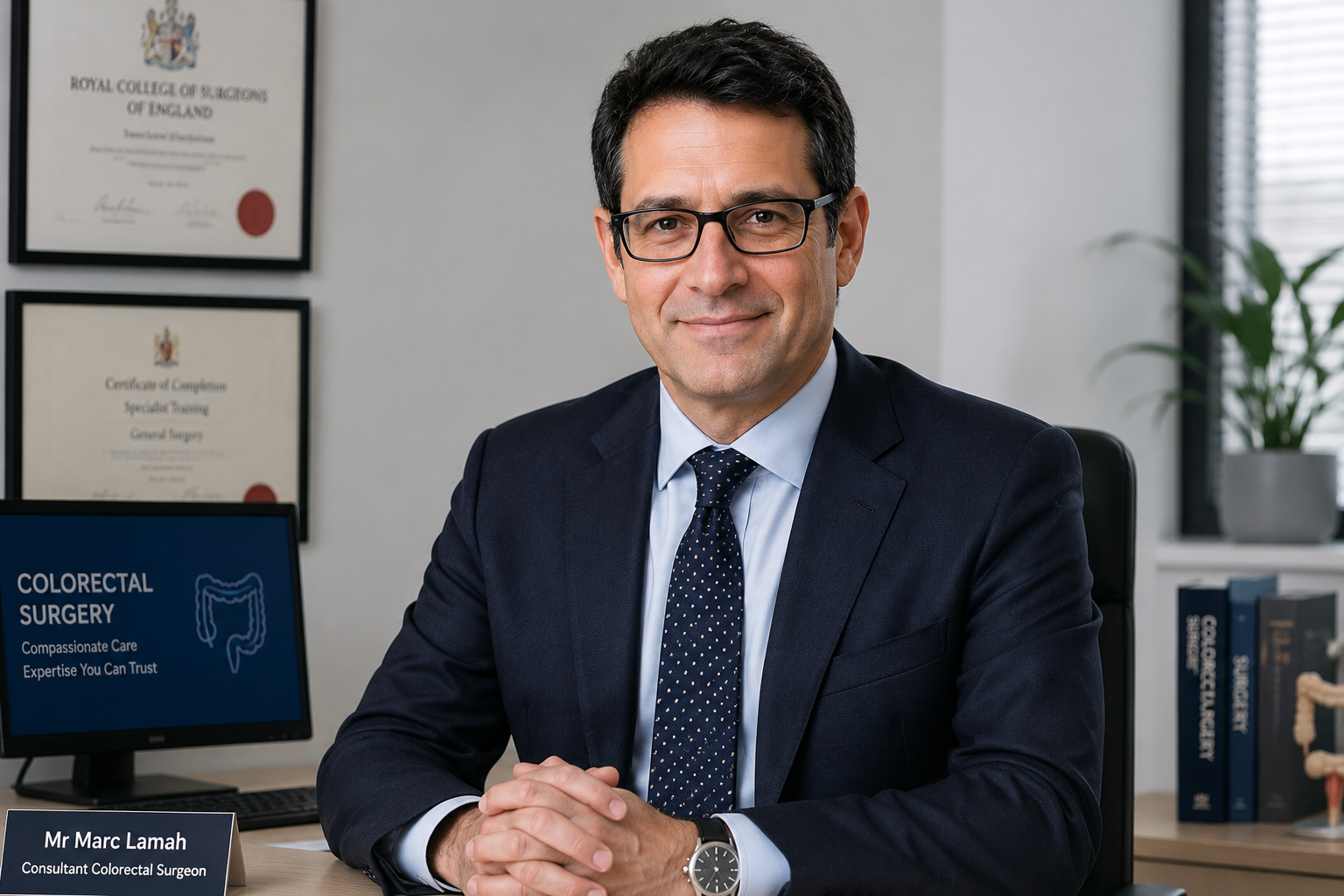
Marc Lamah is a British consultant surgeon known for his work in general and colorectal surgery, particularly the treatment of colorectal cancer, rectal conditions, and benign anorectal disorders. He has spent more than two decades working as a consultant and has also contributed to surgical research and medical education.
His career combines clinical practice, specialist colonoscopy, research, teaching, and leadership. He has worked at the Royal Sussex County Hospital within University Hospitals Sussex and has held senior roles in colorectal and digestive surgery.
Who Is Marc Lamah?
Marc Lamah is a consultant general and colorectal surgeon based in Brighton, England. His professional work focuses heavily on diseases and conditions affecting the colon, rectum, and lower gastrointestinal tract.
His specialist interests include colorectal cancer, early and advanced rectal cancer, colonoscopy, haemorrhoids, anal fissures, anal fistulas, rectal prolapse, faecal incontinence, and pelvic floor disorders.
He is also associated with the Royal Sussex County Hospital, where he has served as a consultant surgeon and held leadership responsibilities within surgery and digestive disease services.
Education and Medical Training
Marc Lamah’s medical education began at the University of Cambridge. His CV records pre-clinical studies from 1982 to 1985, followed by clinical medicine from 1985 to 1987. He received his medical qualifications from Cambridge in 1988.
He later completed specialist surgical training through rotations in London. His previous appointments included work at institutions such as St George’s Hospital, the Royal Marsden Hospital, the Royal National Orthopaedic Hospital, and other hospitals involved in his surgical training.
His qualifications include an MB BChir, MA, MD, and FRCS in General Surgery. He completed his Certificate of Completion of Specialist Training in 2000.
Marc Lamah’s Surgical Career
Lamah became a consultant surgeon in February 2001 and has continued his professional work at University Hospitals Sussex. His experience includes both general and colorectal surgery.
According to his professional CV, his surgical experience includes more than 2,000 colon and rectal cancer procedures, over 6,000 colonoscopies, and more than 1,000 procedures involving benign coloproctology. His work has included elective and emergency surgery as well as open and laparoscopic procedures.
He has also performed specialist procedures for early rectal cancer and advanced or recurrent disease.
Areas of Medical Expertise
One of Marc Lamah‘s main areas of expertise is colorectal surgery.
This field covers conditions involving the large intestine, rectum, and anus. His reported clinical interests include:
- Colorectal cancer
- Early and advanced rectal cancer
- Advanced colonoscopy
- Haemorrhoids
- Anal fissures
- Anal fistulas
- Rectal prolapse
- Faecal incontinence
- Rectocele
- Pelvic floor disorders
- Hernia surgery
- Chronic constipation
His profile at the Private Healthcare Information Network also identifies general surgery, colorectal surgery, and endoscopy as his principal specialties.
Colonoscopy and Bowel Cancer Screening
Colonoscopy is another important part of Lamah’s professional work. The procedure allows doctors to examine the inside of the colon and rectum and can help identify abnormalities such as polyps and cancers.
Lamah is described by professional healthcare sources as an accredited Bowel Cancer Screening Colonoscopist in Brighton. His specialist colonoscopy experience forms an important part of his clinical practice.
His CV also records more than 6,000 colonoscopies, demonstrating the significant role that endoscopy has played throughout his career.
Research and Publications
Marc Lamah has also been involved in surgical research. His ResearchGate profile lists more than 20 publications and hundreds of citations, covering topics in colorectal surgery, abdominal surgery, pelvic floor disorders, and other areas of medicine.
One example is research into the surgical treatment of rectocele. A paper published in Colorectal Disease examined outcomes following anterior levatorplasty and reported patient outcomes over several years of follow-up.
His research background adds another dimension to his clinical career, particularly because colorectal surgery often requires careful evaluation of treatment outcomes and long-term patient results.
Leadership and Teaching
Lamah has taken on leadership responsibilities alongside his clinical work. His CV states that he served as Clinical Lead of the Department of General Surgery from 2016 to 2023 and also held other leadership roles involving cancer multidisciplinary teams and governance.
Teaching has also been part of his career. His professional profile notes extensive teaching experience at different levels, including work with trainee surgeons.
This combination of clinical practice, research, and teaching is particularly relevant in specialist surgery, where techniques and treatment approaches continue to develop.
Professional Memberships
Marc Lamah is associated with several professional medical organisations. These include the Royal College of Surgeons, the Association of Coloproctologists, and the British Medical Association.
Professional memberships can provide opportunities for continuing education, professional development, and engagement with wider developments in surgery.
What Makes Marc Lamah’s Career Notable?
Several aspects of Marc Lamah’s career stand out.
First, he has spent many years working specifically in colorectal and general surgery. Second, his experience covers both cancer-related surgery and benign conditions. Third, his career includes substantial experience in colonoscopy and bowel cancer screening.
His involvement in research and surgical education is another important part of his professional background. Rather than focusing only on clinical treatment, his career has also included research publications, training, and departmental leadership.
Common Misconceptions About Colorectal Surgeons
A colorectal surgeon does not only treat cancer.
Specialists in this field can also manage many non-cancerous conditions involving the colon, rectum, and anus. These can include haemorrhoids, anal fissures, fistulas, rectal prolapse, constipation-related problems, and pelvic floor disorders.
Another misconception is that seeing a colorectal specialist automatically means surgery is required. Depending on the condition, assessment may involve medical treatment, lifestyle changes, diagnostic testing, colonoscopy, or other non-surgical approaches.
Frequently Asked Questions
Who is Marc Lamah?
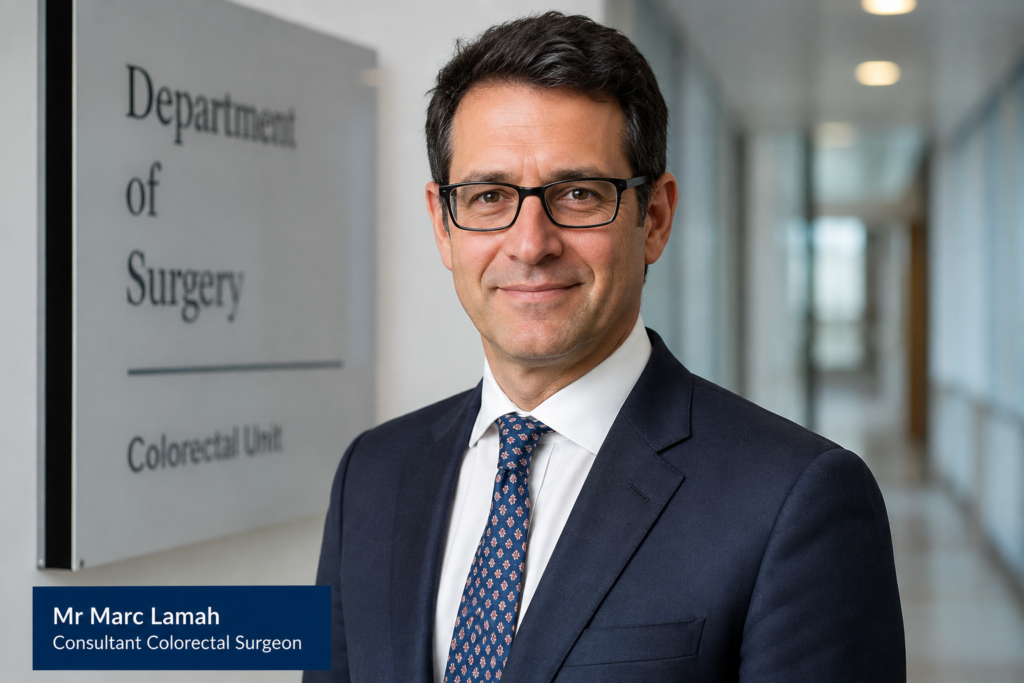
Marc Lamah is a consultant general and colorectal surgeon associated with the Royal Sussex County Hospital in Brighton, England. His specialist interests include colorectal cancer, rectal disease, colonoscopy, and benign anorectal conditions.
What is Marc Lamah known for?
He is particularly known professionally for his experience in colorectal surgery, advanced colonoscopy, bowel cancer surgery, and the treatment of benign colorectal and anorectal disorders.
Where did Marc Lamah study medicine?
Marc Lamah studied medicine at the University of Cambridge and completed his medical qualifications there in 1988.
Does Marc Lamah perform colonoscopies?
Yes. Colonoscopy is one of his specialist areas, and his professional CV reports extensive experience performing the procedure.
What conditions does Marc Lamah treat?
His listed clinical interests include colorectal cancer, rectal cancer, haemorrhoids, anal fissures, anal fistulas, rectal prolapse, faecal incontinence, pelvic floor disorders, and other colorectal conditions.
Has Marc Lamah published medical research?
Yes. His professional research profile lists numerous publications covering colorectal surgery and other areas of surgical medicine.
Where does Marc Lamah work?
He is a consultant surgeon at the Royal Sussex County Hospital, part of University Hospitals Sussex. He also practises privately at The Montefiore Hospital in Brighton.
Final Thoughts
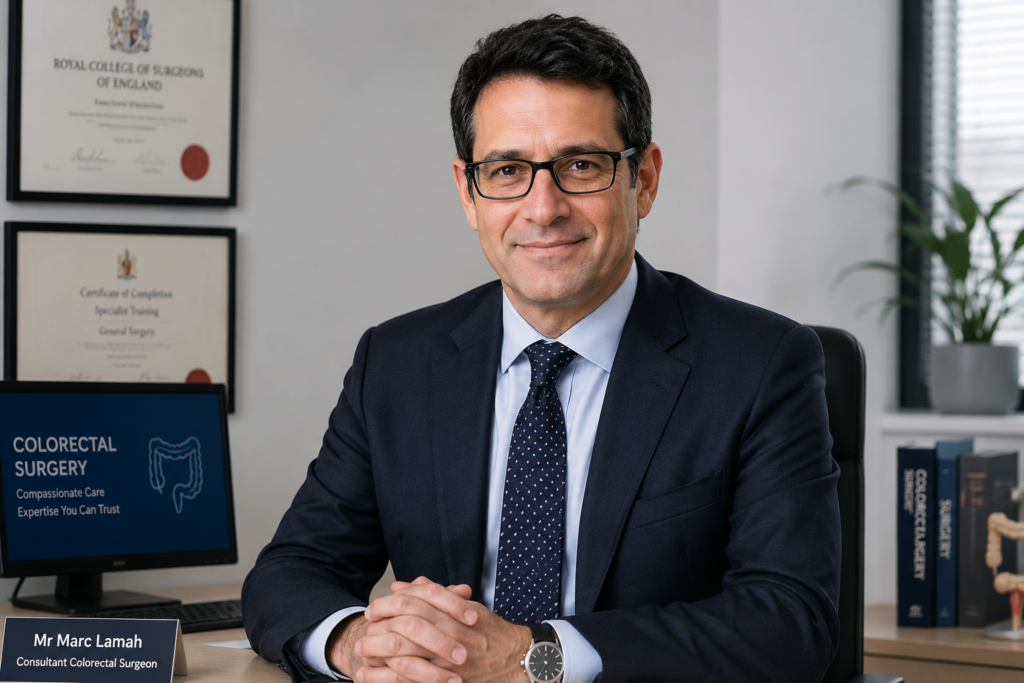
Marc Lamah has built a long career around general and colorectal surgery, with particular expertise in colorectal cancer, rectal conditions, colonoscopy, and benign anorectal disorders. His professional background includes medical training at Cambridge, consultant-level surgical practice, research, teaching, and departmental leadership.
For readers researching his background, the most useful way to understand his career is to look at the combination of clinical experience, specialist procedures, research activity, and leadership rather than focusing on a single part of his work.