
Introduction
A policeofficer plays an important role in protecting communities, responding to emergencies, enforcing laws, and helping maintain public safety. While many people picture a patrol officer responding to calls, police work includes many different responsibilities, from investigations and traffic enforcement to community outreach and crime prevention.
This guide explains what a police officer does, the skills needed for the job, typical training requirements, possible career paths, and important factors to consider before choosing law enforcement as a career.
What Is a Police Officer?
A police officer is a trained law enforcement professional who works to protect people, property, and public order.
Police officers may work for:
- City police departments
- County law enforcement agencies
- State police agencies
- Campus police departments
- Transit police agencies
- Specialized law enforcement units
Their exact responsibilities depend on their agency, location, rank, and assignment.
The job can involve routine patrols as well as unexpected emergency situations. Officers must often make decisions quickly while following laws, department policies, and professional standards.
What Does a Police Officer Do?
The daily work of a police officer can vary significantly. Some officers spend most of their time on patrol, while others specialize in investigations or other areas.
Common duties include:
Responding to Emergency Calls
Officers may respond to reports involving accidents, theft, disturbances, missing persons, domestic incidents, or other emergencies.
They must assess situations, protect people from immediate danger, and request additional resources when necessary.
Enforcing Laws
Law enforcement officers enforce applicable federal, state, and local laws. This can include traffic laws, criminal laws, and regulations related to public safety.
Investigating Incidents
Some officers investigate crimes by:
- Interviewing witnesses
- Collecting information
- Documenting evidence
- Reviewing reports
- Working with investigators and other agencies
Writing Reports
Accurate documentation is an important part of police work. Officers may prepare reports describing what happened, who was involved, what actions were taken, and what evidence was collected.
Clear reports can become important records in later investigations or court proceedings.
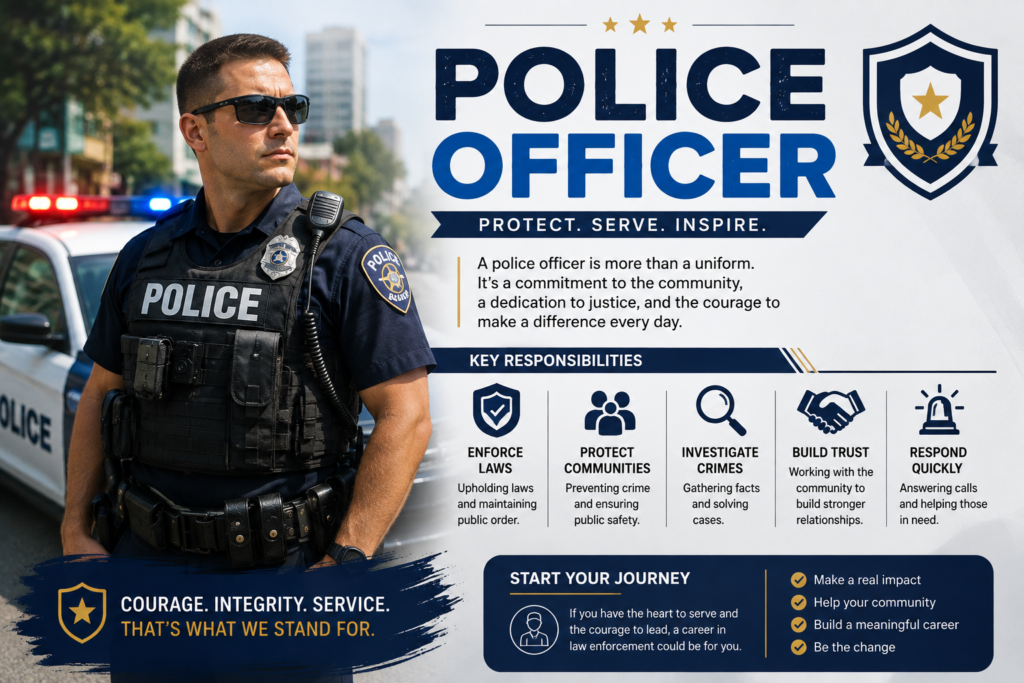
Community Policing
Modern policing can also involve building relationships with residents, businesses, schools, and community organizations.
Community-oriented work may focus on:
- Preventing crime
- Addressing local concerns
- Building public trust
- Educating residents
- Connecting people with appropriate services
Police Officer Skills
Successful officers need more than physical fitness. The job requires a combination of communication, judgment, emotional control, and technical skills.
Important skills include:
| Skill | Why It Matters |
|---|---|
| Communication | Helps officers interact clearly with the public and colleagues |
| Critical thinking | Supports sound decisions in changing situations |
| Observation | Helps identify important details |
| Writing | Supports accurate reports and documentation |
| Teamwork | Police work often involves coordinated responses |
| De-escalation | Helps manage tense situations safely |
| Physical fitness | Supports the physical demands of the job |
| Integrity | Builds public and professional trust |
Why Communication Matters
Police officers regularly interact with people from different backgrounds and in stressful circumstances.
Strong communication can help an officer:
- Gather accurate information.
- Explain instructions clearly.
- Reduce confusion.
- Listen to witnesses and victims.
- Handle difficult conversations professionally.
Good communication is useful both during emergencies and during everyday community interactions.
Police Officer Requirements
Requirements vary by jurisdiction and agency, so there is no single nationwide checklist that applies to every police department.
However, applicants commonly need to meet requirements involving:
- Minimum age
- Education
- Citizenship or legal eligibility
- Background checks
- Physical fitness
- Medical standards
- Psychological screening
- Driver’s license requirements
- Written examinations
- Academy training
Some agencies may have additional requirements related to previous employment, criminal history, residency, or other qualifications.
Always check the official recruiting page of the specific agency because requirements can change.
How to Become a Police Officer
If you’re considering this career, the process generally follows several stages.
1. Research Local Requirements
Start by identifying police departments or law enforcement agencies where you may want to work.
Review their official requirements before spending time or money on preparation.
2. Complete Required Education
Education requirements vary. Some agencies require a high school diploma or equivalent, while others may prefer or require college coursework or a degree.
Subjects such as criminal justice, psychology, communication, and public administration can provide useful background knowledge.
3. Apply to an Agency
Submit an application through the department’s official recruitment process.
Be prepared to provide accurate information about your education, employment history, and background.
4. Complete the Selection Process
The process may include written tests, interviews, physical assessments, background investigations, medical examinations, and psychological evaluations.
5. Attend Police Academy Training
Candidates who successfully move through the selection process generally complete formal law enforcement training.
Training can cover areas such as:
- Law and legal procedures
- Ethics
- Report writing
- Emergency response
- Defensive skills
- Firearms, where applicable
- First aid
- Communication
- De-escalation
- Traffic enforcement
The exact curriculum depends on the agency and jurisdiction.
Police Officer Career Paths
Becoming a police officer can be the beginning of a broader law enforcement career.
With experience and additional training, an officer may pursue roles such as:
- Detective
- Investigator
- Sergeant
- Lieutenant
- Training officer
- School resource officer
- Traffic specialist
- K-9 officer
- Community policing specialist
- Specialized investigative roles
Advancement usually depends on the agency, qualifications, performance, experience, and available positions.
Benefits and Challenges of Police Work
Police work can be rewarding, but it also comes with serious responsibilities.
Potential Benefits
- Public service
- Career advancement opportunities
- Variety in daily work
- Specialized career options
- Team-based work
- Opportunity to help communities
Common Challenges
- Irregular schedules
- Night, weekend, and holiday shifts
- Exposure to stressful situations
- Physical demands
- Emotional pressure
- High levels of responsibility
Anyone considering this career should understand both sides before applying.
Common Mistakes When Pursuing a Police Career
Applicants can improve their preparation by avoiding common mistakes.
Ignoring Agency-Specific Requirements
Do not assume every department follows the same hiring standards.
Underestimating the Background Investigation
Applications should be complete and truthful. Missing or misleading information can create serious problems during the hiring process.
Focusing Only on Physical Fitness
Fitness matters, but communication, judgment, ethics, writing, and emotional control are also important.
Not Researching the Job
Before applying, learn about shift schedules, training, duties, advancement opportunities, and the expectations of the agency.
Pro Tips for Future Police Officers
If law enforcement interests you, start preparing early.
- Maintain good physical fitness.
- Improve writing and communication skills.
- Research local departments.
- Learn about criminal justice and public safety.
- Practice professional interview skills.
- Keep your application information accurate.
- Review official recruitment requirements regularly.
- Talk with qualified law enforcement professionals when possible.
Featured Snippet: What Does a Police Officer Do?
A police officer protects public safety by responding to calls, enforcing laws, investigating incidents, documenting events, assisting people in emergencies, and working with communities to prevent crime.
Frequently Asked Questions
1. What does a police officer do?
A police officer helps protect public safety by enforcing laws, responding to calls, investigating incidents, writing reports, and assisting people during emergencies.
2. What are the requirements to become a police officer?
Requirements vary by agency but may include education, age requirements, background screening, physical testing, medical and psychological evaluations, and police academy training.
3. Do police officers need a college degree?
Not always. Education requirements vary between agencies. Some departments require a high school diploma or equivalent, while others may require or prefer college education.
4. How long does police academy training take?
The length of academy training varies by state, agency, and program. Applicants should check the specific academy or department for current requirements.
5. What skills should a police officer have?
Important skills include communication, critical thinking, observation, writing, teamwork, decision-making, integrity, and physical fitness.
6. Can a police officer become a detective?
Yes. Many agencies offer investigative career paths, although the requirements and selection process differ by department.
7. Is being a police officer dangerous?
Law enforcement can involve unpredictable and potentially dangerous situations. Officers receive training designed to help them respond safely and professionally.
8. Do police officers work weekends?
Many police departments operate 24 hours a day, so officers may work nights, weekends, holidays, or rotating shifts.
9. What should I study to become a police officer?
Useful areas of study can include criminal justice, communication, psychology, public administration, and related subjects. However, required education differs by agency.
10. Where can I find official police officer requirements?
The best source is the official recruitment or careers page of the specific police department or law enforcement agency where you plan to apply
Conclusion
A policeofficer career combines public service, responsibility, teamwork, and continuous learning. The job involves much more than responding to emergencies. Officers may investigate incidents, write detailed reports, communicate with community members, enforce laws, and work to prevent crime.
If you’re considering becoming a police officer, the best first step is to research the official requirements of the agencies you’re interested in and prepare for the education, fitness, screening, and training stages. Understanding the real responsibilities of the profession can help you decide whether law enforcement is the right career path for you.
Call to Action
Looking for smarter ways to manage repetitive business tasks and improve productivity? the dailynook can help teams build practical internal tools and streamline everyday workflows. Explore how better tools can make your work more organized and efficient.